Texas Cliff Used for Bison Hunts Across 3,000 Years
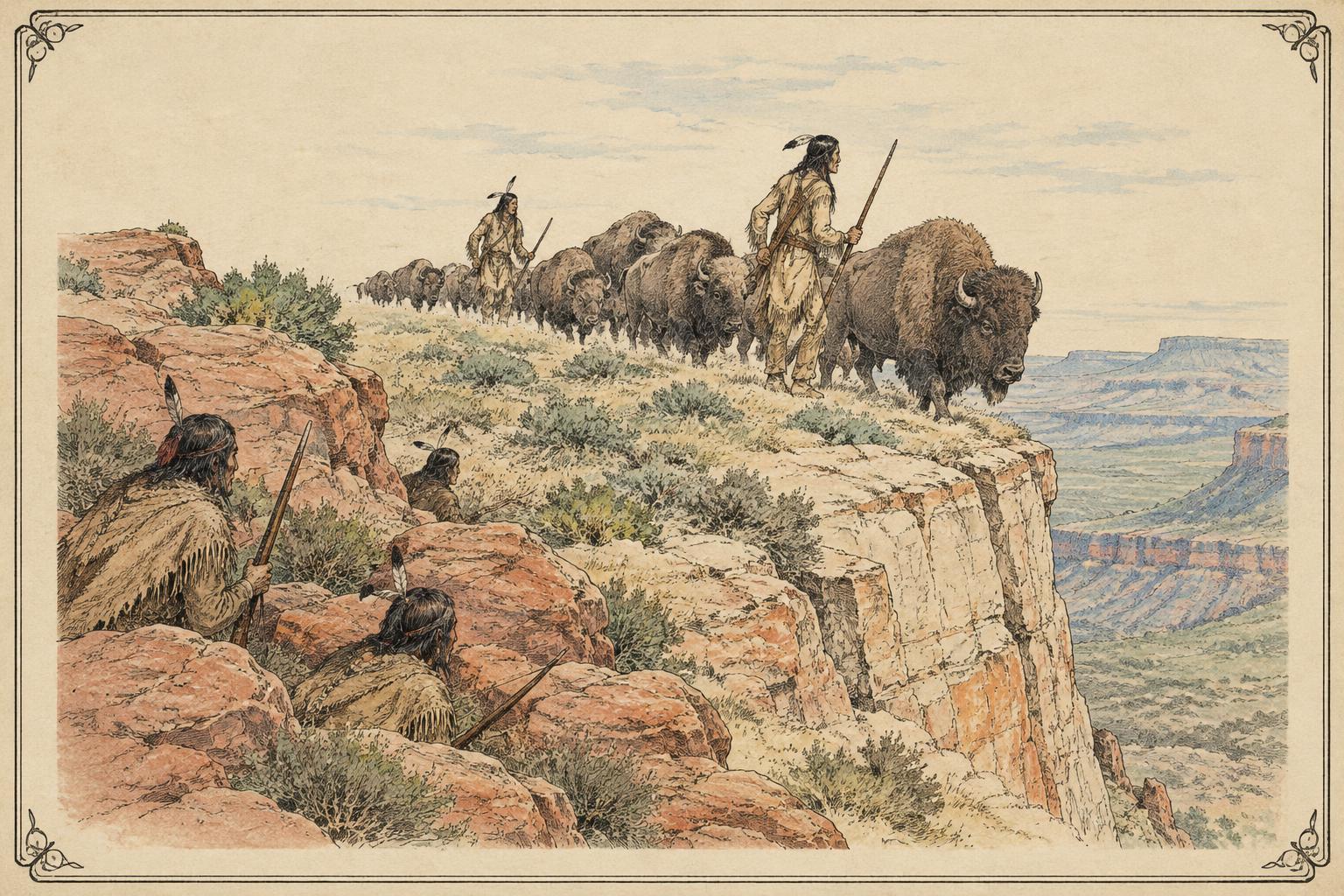
A cliff spur in the Texas Panhandle was used again and again to kill bison for about 3,000 years. The site is called Nighthawk. It lies in Caprock Canyons State Park. A team led by August "Gus" Costa of Rice University reported the finding in the journal American Antiquity.
Nighthawk came to light when bison bones began to erode out of a bone bed beneath a cliff spur about 65 feet (20 meters) high. Excavators found chipped stone tools, a few arrowheads and bones with cut marks from butchery. The site sits between two cliffs, so the animals could only have arrived by falling from above.
Radiocarbon dates revealed at least seven separate kill events. They fall between roughly 1550 B.C. and A.D. 1550. Each was at least a century apart, and the average gap was about 500 years. One event, labeled Kill 3, left most of the bones. It probably took place around A.D. 300 to 400.
Only one other scientifically verified bison jump was known in Texas. That was Bonfire Shelter, found more than 60 years ago. Jump sites are well documented on the northern Plains. Costa's team has now flagged eight more possible jump sites in and around Caprock Canyons. Many may have been missed because they lie on steep slopes beneath cliffs, where archaeologists seldom dig.
The setting differs from typical northern jumps. Nighthawk sits on a projecting cliff where the animals may have seen the drop ahead. The researchers suggest it may have worked more like "walking the plank" than a surprise stampede. Costa said the team does not know exactly how the herds were managed.
Such hunts needed many people. Some hunters located herds and guided them toward the cliff. Others emerged from hiding to steer the animals. More groups finished off the wounded and processed meat and hides. Costa said the gatherings probably served ceremonies, trade and alliances too. The team notes that bison fat would not have kept long in the Texas heat, which may point to social uses over winter provisioning.
The cliff edge moved about the length of a football field through erosion. Hunters kept returning through the shift from spears to bows and the arrival of pottery. The researchers read this as knowledge handed down across generations, not rediscovered each time.
The case shows how a hidden, rarely excavated landscape can overturn an assumption built on missing evidence. A lack of known sites had led some to doubt that southern hunters used cliffs at all. Nighthawk shows that an empty record can reflect where people looked, not what ancient communities knew.
Compiled from the reports below. Read the originals.
Sources
- November 20, 2026
- November 21, 2026