Student Dig at Redesdale Turns Up Roman Gold, a Jupiter Gem and a Lead Message
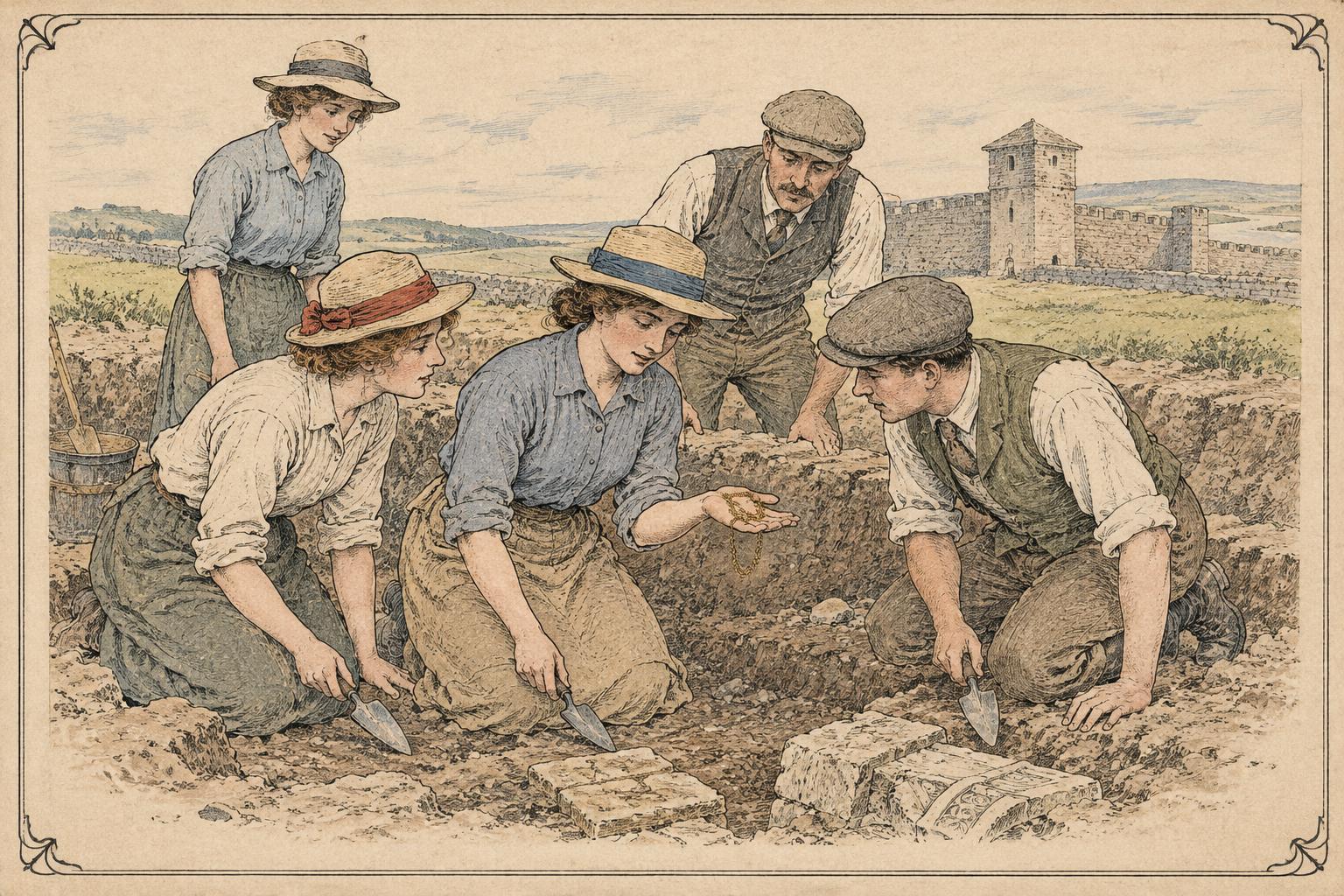
A section of Roman gold chain, about 7 cm long, came out of the ground on the first morning of this summer's excavation at Redesdale, Northumberland. Student Elise Zallu found it. The chain is made of tiny rings, each pinched into a figure of eight, folded and interlinked. Newcastle University says it is so well preserved that a complete piece could still be worn.
Shannon Wood found a folded lead sheet on the same day. Faint cursive Latin is scratched into it. Archaeologists think it is most likely a commercial seal tied to trade, tax or the movement of goods. It could also be a personal message or a curse tablet. Further study of the text should settle the question.
On day two, Megan Potter uncovered a bronze peltate cavalry dangler. It is crescent-shaped, with molded ridges and much of its gilding intact. Such mounts hung from a belt, a horse harness or the lower end of a scabbard. The team suggests it belonged to a cavalry officer or another person of rank.
In the closing week, Maisy Watmough and Zoe Yuill found a carnelian intaglio, an engraved stone made for a ring. It shows Jupiter with a scepter and a small figure of Victory, with an eagle at his feet. It is the fourth intaglio from the site. Two turned up in 2025 and one was found in the 19th century.
The students also recovered coins, spearheads, dress accessories and pottery. Many sherds carry scratched graffiti. A Samian ware bowl is marked MARTIN, probably for Martinus, and other fragments seem to carry the same name. These are likely marks of ownership left by someone at the site.
The season brought together 52 first-year students in two groups, each working for two weeks. Volunteers from the Redesdale Archaeology Group joined them, and The Archaeological Practice Ltd directed the work. Newcastle teams have studied the site since the early 1990s, with major campaigns in 1992 to 1998 and 2010. The current project began in 2021 and has explored two large annexes, with their defenses, buildings, roads and signs of industry. Site director Richard Carlton says the finds help show how the frontier worked and how Roman and Native communities dealt with one another.
Small personal objects like these carry names, beliefs and status that official records often omit. A seal stone, a scratched name and a folded lead sheet show how individuals lived and worshipped inside the Roman imperial system.
Compiled from the reports below. Read the originals.
Sources
- November 18, 2026
- November 20, 2026Archaeology MagazineStudents Recover Roman Military Artifacts in Northern England