Painted Birds and Myth Emerge in Mérida's House of the Medusa
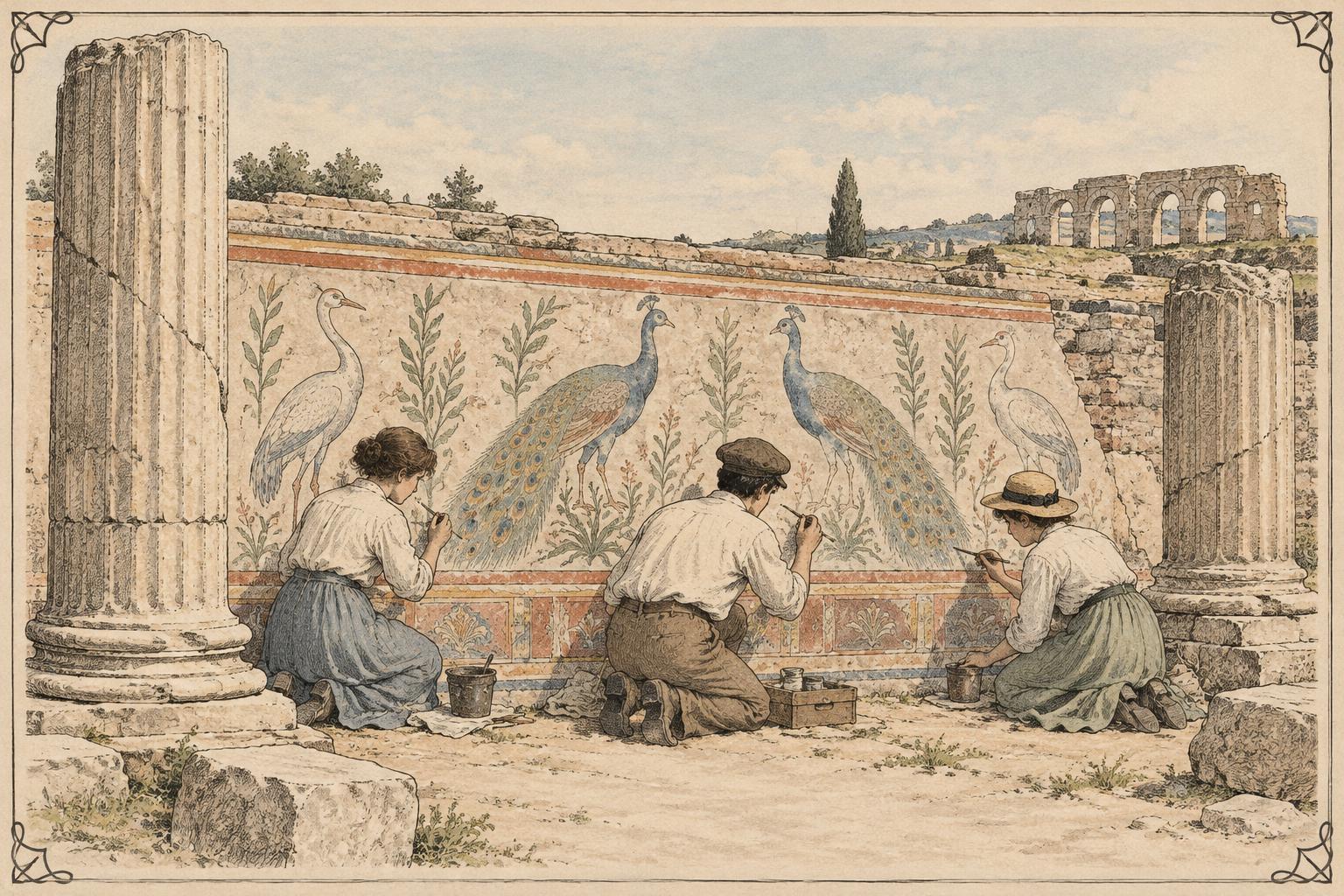
Wall paintings showing peacocks, cranes and mythological figures have come to light in the peristyle of a large Roman house at Huerta de Otero in Mérida, western Spain. The city announced the find on 17 November during a visit to the dig by municipal official Pilar Amor.
The paintings cover the walls of the columned courtyard, inside and out. They mix plant and animal motifs, with many birds. Two deer chased by a feline predator appear, along with a satyr and other mythological figures. Team leader José Vargas says they are very well preserved.
The images came from a strip of land that excavators in 1976 chose not to dig. Vargas calls that choice the product of an old methodology. This year's campaign, carried out by students of the Barraeca V work-based learning school, finally cleared it. The main aim was practical. Archaeologists wanted to see how the room with the Medusa mosaic joined the part of the courtyard already excavated. The paintings were a bonus.
The house is the one where students found a polychrome mosaic of about 30 square metres in 2023. It shows Medusa in an octagonal medallion, ringed by masks, fish and four peacocks. Vargas has read her stern face as a charm to turn away evil. Specialists date the mosaic to the 2nd century. Amor notes that the peacocks now reappear on the walls and calls them images "very representative of the power" of the household. Whether floor and walls belong to one decorative scheme is not yet known.
The house covers more than 54,000 square feet, and who lived in it is still unknown. It was founded in the 1st century and was in use until at least the 5th. The site lies beside a long stretch of the Roman city wall of Augusta Emerita. Vargas estimates the plot exceeds 5,000 square metres and that only about 15 percent has been dug. That leaves most of the house still buried.
The Barraeca V programme ends in December. A new edition starts in January with training, and digging will resume after that. The city has also arranged a guided visit to the site for 22 November.
Roman courtyards like this one were built to impress. Painted birds and myth on garden walls show how wealthy households in the provinces of the empire staged their status, in the same world that shaped the early Christian communities of the Mediterranean.
Compiled from the reports below. Read the originals.
Sources
- November 18, 2026
- November 20, 2026Archaeology MagazineWell-Preserved Murals Uncovered at Roman Residence in Spain