Milk and Wine Found in Menorcan Tomb Vessels
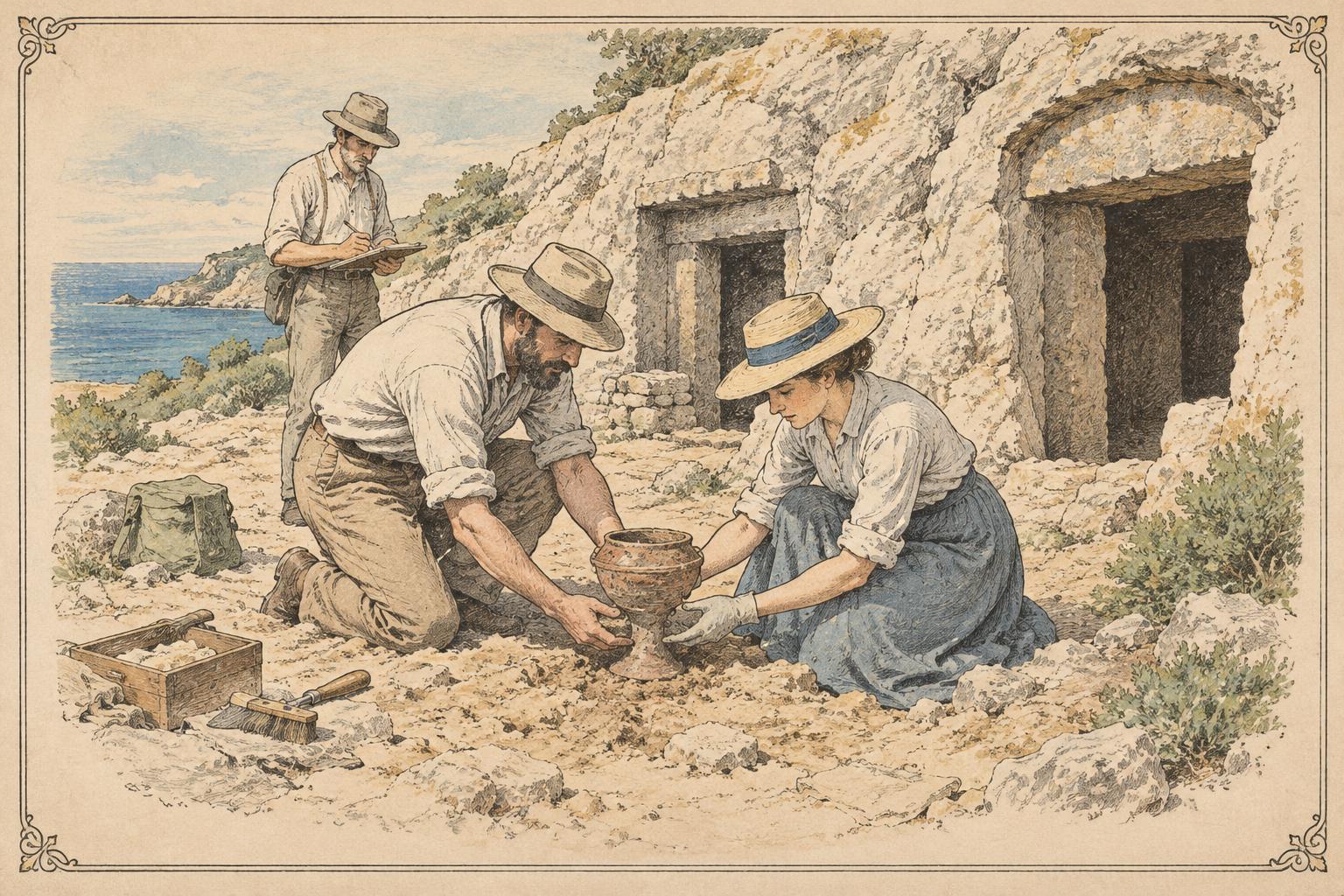
Residues inside 34 ceramic vessels from Cave 45 at the Calescoves burial complex, in Alaior on Menorca, show that milk products were the main offering in the island's distinctive high-bottomed pots. The vessels date to more than 2,000 years ago, in the Late Iron Age, also called the post-Talayotic period.
Researchers from the Autonomous University of Barcelona, the Barcelona Supercomputing Center and Pompeu Fabra University report the results in the Journal of Archaeological Science. The pots were excavated in 2023 and 2024. Many were intact, and a large share still lay where they had first been placed, which is rare.
Wine turned up in a smaller group. It was found on a few locally made pieces whose shapes came from other Mediterranean cultures, the Punic world in particular. Sònia Carbonell notes that islanders took up foreign pot forms yet used them for the drink they were designed to hold. It is the first evidence of wine in a Menorcan funerary rite. The team reads it as a foreign product absorbed into local custom, not a replacement of it.
Animal fats and plant oils also appeared. The set included juglets with side handles, jugs, bowls, conical vessels typical of the Balearic Islands and incense-burner-type vessels so far recorded only on Menorca.
The cave also reveals a division of space. Vessels in the courtyard at the entrance point to the living: offerings, shared consumption and acts of remembrance. Inside the burial chamber lay a small globular jar with a pouring spout, in which milk was identified. Researchers had linked this form to infant burials on Ibiza, and the find supports its use as a baby bottle. Margalida Coll sees in it care for infants carried into funeral practice.
The work also required a new laboratory method. The vessels hold so little that standard sampling was not possible. Adrià Breu explains that the tests for dairy and for wine normally need separate samples. His team merged them into one procedure, which halves the material needed. Scanning, micro-excavation and chemical analysis were used together.
The result shows how a long-debated question about pottery types can be settled by testing what the vessels once held. Shape and style alone had left the purpose of the high-bottomed pots uncertain. Their contents now give the answer.
Compiled from the reports below. Read the originals.
Sources
- November 15, 2026
- November 18, 2026Archaeology MagazineMilk and Wine Detected in 2,000-Year-Old Vessels on Menorca