Possible Poison Residues Found on 125,000-Year-Old Stone Points in Saudi Arabia
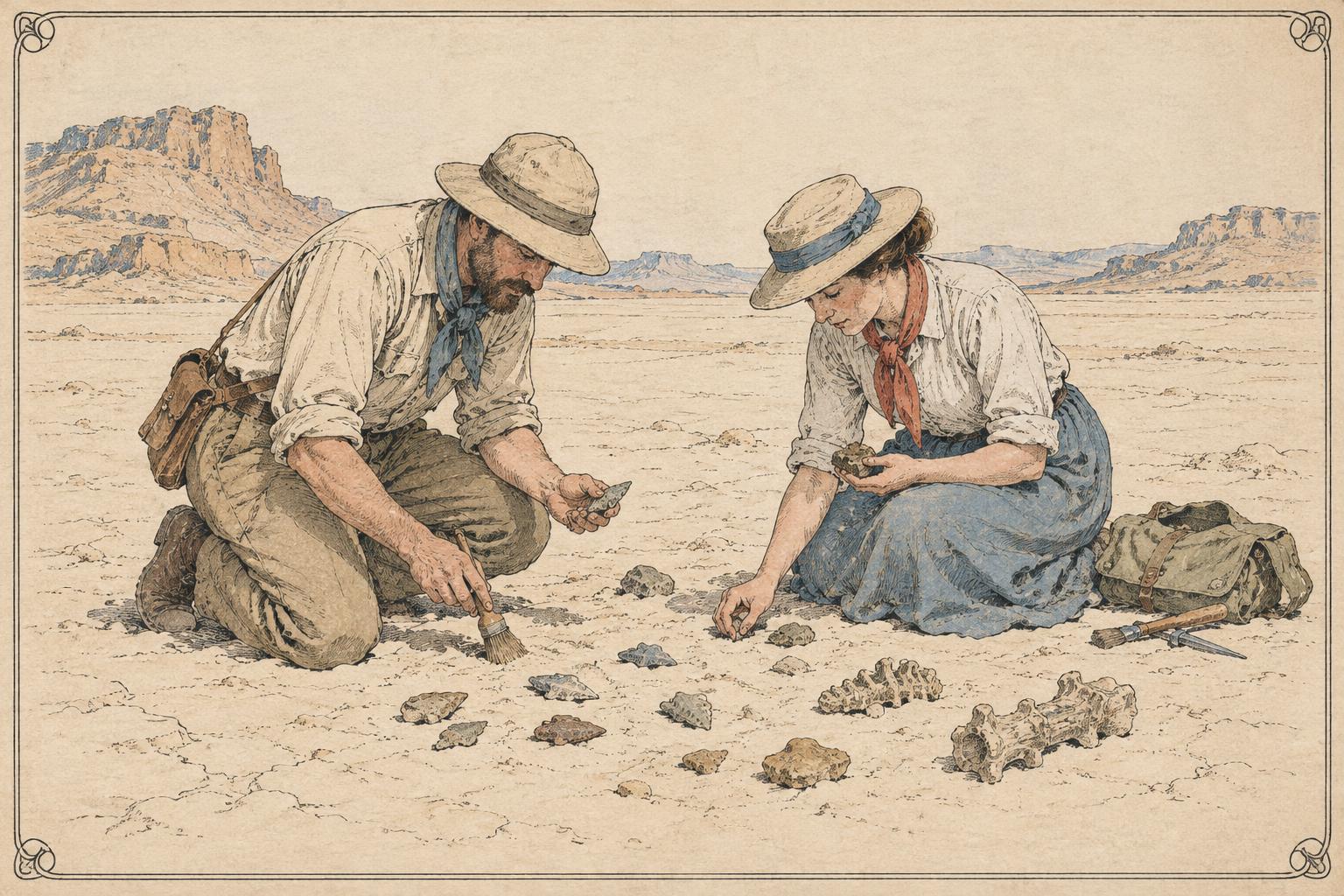
Stone points from 'Uruq Aljelibah in southern Saudi Arabia carry chemical residues linked to the arrow poison tree, Acokanthera schimperi. The finding suggests hunters there may have poisoned their weapons around 125,000 years ago. The study appeared on Nov. 12 in the journal Science. Chris Clarkson of Griffith University led the work with King Abdullah University of Science and Technology and the Saudi Heritage Commission.
The site lies in the Empty Quarter, now a hot desert of dunes. The team found it once sat on a freshwater lake of about 340 square kilometers, up to 29 meters deep. Fossils show hippopotamuses, buffalo, ostriches, camels, gazelles and oryx lived around it, alongside palms, reeds, trees and shrubs.
Archaeology Magazine reports more than 5,000 artifacts and fossils from the site. Live Science reports more than 5,500 stone artifacts. Organic traces survived too, including plant fibers, resins and wood. Several points show impact damage consistent with hunting large animals, and microscopic study found animal tissue near their tips. The tools cluster where animal bones lie, which suggests the shore was a place to hunt and process game.
Clarkson is careful about the poison claim. The date would be well before poisoned arrowheads from South Africa, which are about 60,000 years old. But the team has not shown how any poison was prepared or whether it worked. He calls the points "potentially the oldest evidence for poisoned hunting weapons," in his words to Live Science. Hunters elsewhere are known to cut away meat around a wound before eating, which may bear on how people avoided poisoning themselves.
Jeffrey Rose, who was not part of the study, raised a dating point. Every stone artifact was collected from the surface, and none came from the dated layers. In his view the 125,000-year date belongs to the lake, so for the tools it is only a maximum age. He also noted that some flakes fit back together, which shows tools were made on the spot. No human remains were found. The team suspects the makers were Homo sapiens, since the age fits early movements out of Africa.
The site adds to evidence that wetter spells made Arabia a livable corridor between Africa and Asia. Some early migrants may have stayed in this "Green Arabia" while others moved on into Asia. Clarkson wants to return to find more fossils, push the chemical analysis further, and look for sealed deposits along the lake margins.
The case shows how old evidence is read. A date for a deposit does not automatically fix the age of objects lying on its surface. It also shows that fragile organic traces can reveal tools far more complex than the stone alone suggests.
Compiled from the reports below. Read the originals.
Sources
- November 12, 2026Live Science125,000-year-old poisoned stone points discovered on shore of ancient lake in Saudi Arabia
- November 16, 2026Archaeology MagazineDid Paleolithic Arabians Poison Their Weapons?