Limestone Foundation Under Alexandria Park May Be a Ptolemaic Royal Tomb
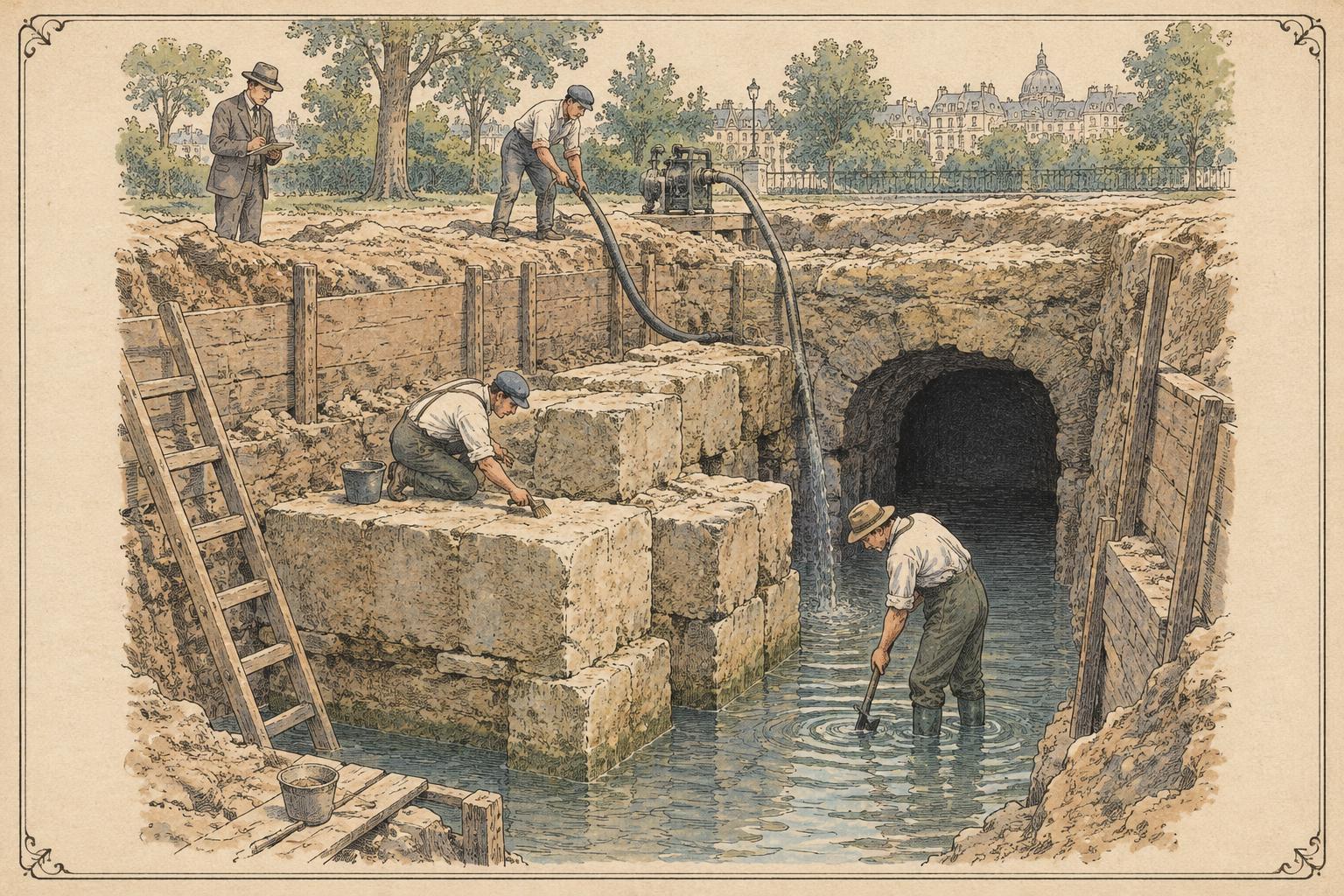
A foundation of limestone blocks, a surrounding wall and a tunnel have been uncovered in the Shallalat Gardens, a public park in central Alexandria. The remains lie in what ancient writers placed in the Royal Quarter, the palace district of the Ptolemaic kings.
The work was carried out by the Hellenic Research Institute of Alexandrian Civilization. Its mission is directed by Calliope Limneos-Papakosta and has dug at the site for about twenty years. Egypt's Ministry of Tourism and Antiquities announced the find after Minister Sherif Fathy ordered a committee of specialists to review the mission's report.
The committee was chaired by Ayman Ashmawy of the Supreme Council of Antiquities. It included Greek and Roman specialists from the universities of Alexandria and Tanta. Members visited the dig and studied the remains. They judged that the square plan and the size of the foundation point to a large, tall structure. Its architectural features suggest a funerary use.
If so, the building may match the royal tomb that Ptolemy IV Philopator founded, which Strabo mentions in his account of the city. Strabo describes an enclosure called the Soma where the kings and Alexander were buried. A later author, Zenobius, says Philopator built a monument called the Sema and placed his ancestors and Alexander in it.
Ashmawy stressed that this is an initial hypothesis. Excavation will continue to establish what the building was and how it was used.
The dig is difficult. The water table lies about seven and a half meters down, so the team has pumped water from wells since 2016. The foundation lies roughly ten meters below the park surface. Pottery among the stones dates it to the Ptolemaic period. Cleared stretches show the foundation line running at least 36 meters, with its main axis east to west.
Caution is needed on the tunnel. In its earlier preliminary report, the mission described a tunnel as later than the Hellenistic period and possibly a water channel. It is not certain this is the same tunnel the ministry describes. The announcement gives no measurements and mentions no inscriptions or burial remains. The committee's case rests on shape, size and location.
The find bears on how texts like Strabo's are tested against the ground. The site of the Ptolemaic royal burials in Alexandria is known only from written descriptions. Any building that fits them can be checked against those texts, but only further excavation can confirm it.
Compiled from the reports below. Read the originals.
Sources
- November 24, 2026La Brújula VerdeFoundations of a Giant Building Found Beneath an Alexandria Park Could Be the Royal Tomb of the Ptolemies and Alexander the Great
- November 25, 2026Archaeology MagazinePtolemaic Foundation Unearthed in Alexandria