Isotopes in Cremated Bone Show Migrants in Britain's First Roman Capital
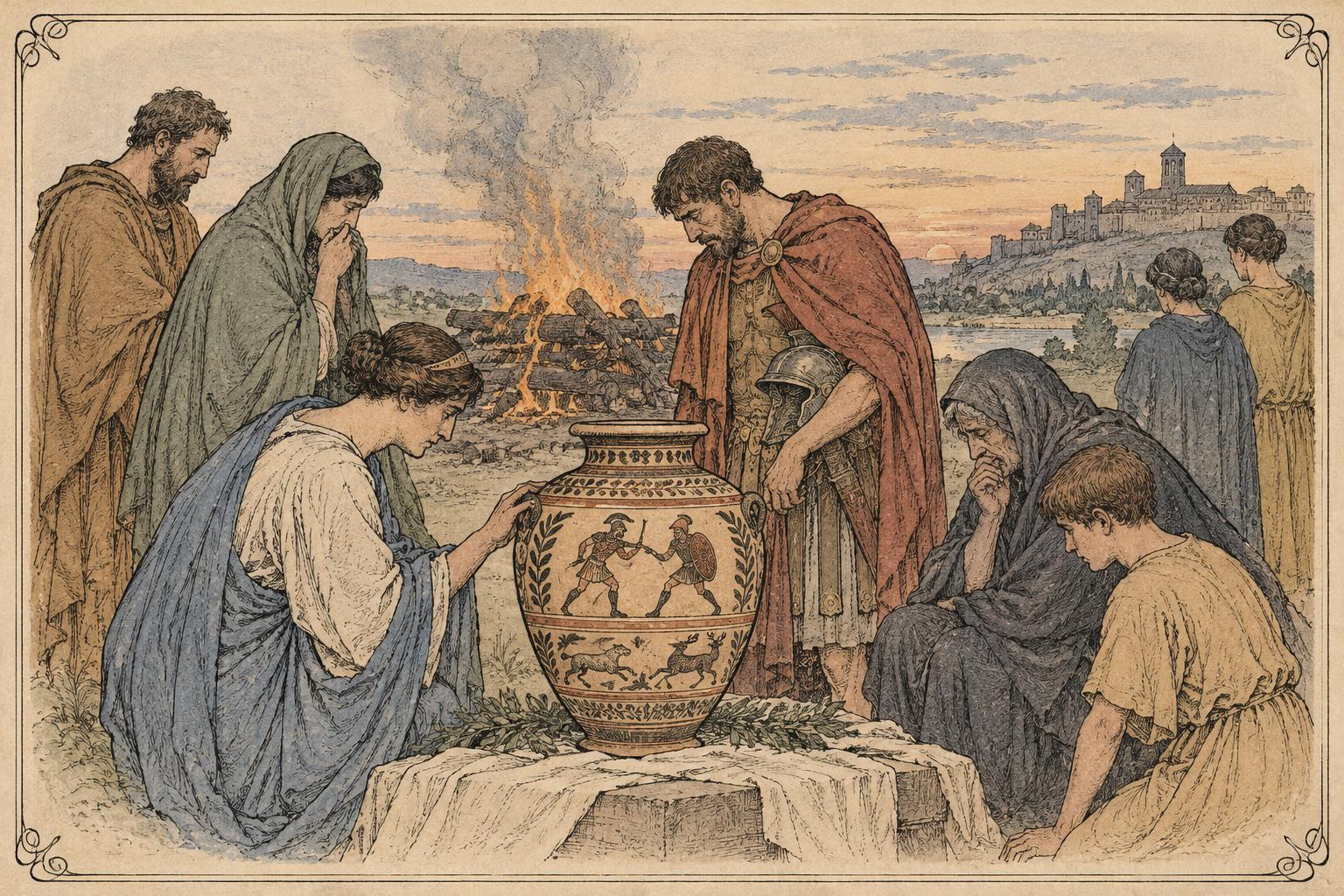
A man buried inside the Colchester Vase spent his childhood in the Mediterranean region. That is the finding of a Durham University team that tested cremated bone from 22 burials in Colchester, known to the Romans as Camulodunum, in southeast England. The burials are about 2,000 years old.
The results, published in Royal Society Open Science, show that several of the 22 people grew up outside Britain. Three carried chemical signatures pointing to a childhood somewhere around the Mediterranean. Italy, Spain and Lebanon are given as examples of the regions involved.
The vase is decorated with a gladiatorial show and an animal hunt. Given those scenes, the man whose ashes it held may have been a trainer of gladiators. He could also have been a rich sponsor who paid for such contests. The study links a migrant's life story to the entertainments of the Roman world.
The work was led by Joanna Moore and Janet Montgomery of Durham's Department of Archaeology, with Geoff Nowell of Earth Sciences. Colleagues from the University of Reading and York Museums Trust also took part. The team wanted to solve a long-standing problem. In the first century of Roman rule, Britons mostly cremated their dead. A funeral pyre's heat wipes out much of the evidence normally used to trace where a person was raised.
To get around this, the researchers measured two chemical markers together, strontium and lead isotopes. Together these had not been applied before to Romano-British cremations. The pairing picked up clues that standard approaches could have missed.
Colchester became the capital of the new province of Britannia after the Roman invasion of A.D. 43. It drew traders and administrators and kept strong ties with continental Europe. The new evidence now shows some of those arrivals as individuals who lived, worked and settled there.
The method may also open the way to studying many other people whose remains were burned and who have been hard to examine until now.
The study shows how far people moved within the Roman Empire. It also shows that a new technique can recover the origins of the dead even from bone that fire had altered.
Compiled from the reports below. Read the originals.
Sources
- November 18, 2026
- November 23, 2026Archaeology MagazineStudy Suggests People Traveled Long Distances to Roman Britain’s First Capital