"Isn't the parable of the sower about four types of hearts?" A reader put that question to me recently. The honest answer begins with yes. In Mark 4:13-20, Jesus (YHWShA) explains the four soils himself, and he does describe four ways people receive the word. Anyone who has sat through the sermon that ends with "So, which soil are you?" has heard something true.
Yet the story grows larger, and stranger, when we hear it the way a Galilean villager in the first century would have heard it. That villager likely did not think first about temperament. He would have thought about a people uprooted from their land, and about the God (Alohim) who had promised through the prophets to plant them again. The question about our hearts stays, but it belongs inside that larger hope. To see why, we start where Jesus started: with a farmer walking a field, and a people who had waited centuries to come home.
Four Types of Hearts: Where the Text Starts
Any honest rereading has to begin by granting what the reader's question gets right. The parable of the sower is one of the few stories in the Gospels that comes with its own explanation attached, and that explanation does talk about hearts.
What Mark 4:13-20 Plainly Says
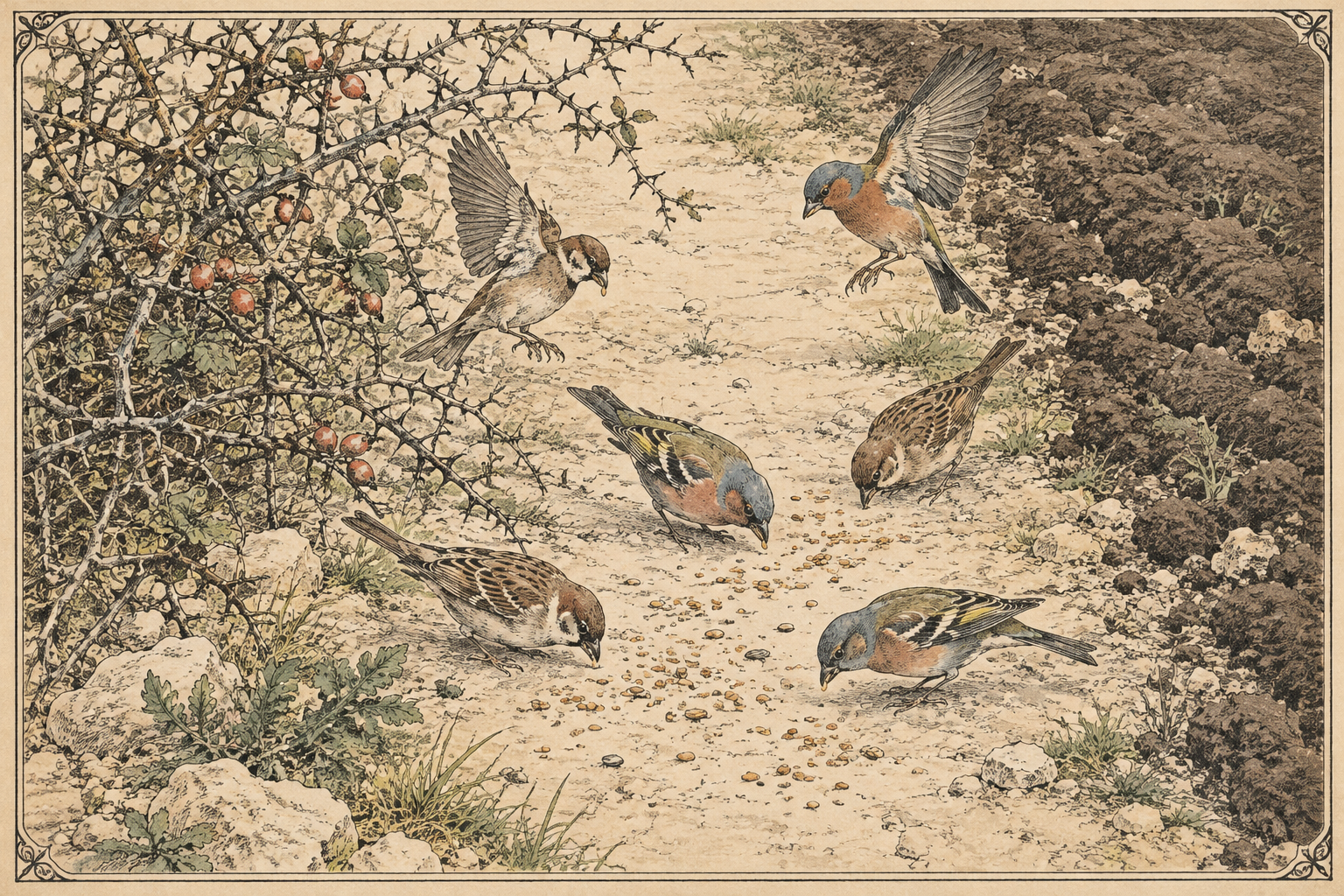
The crowd on the shore of the Sea of Galilee pressed so tightly that Jesus had to teach from a boat. Later, alone with the Twelve and a few others, he explains the story. Some seed falls on the path, and Satan comes at once and takes the word away. Some falls on rocky ground, where people receive the word with joy but have no root, so when trouble comes on account of the word they fall away.
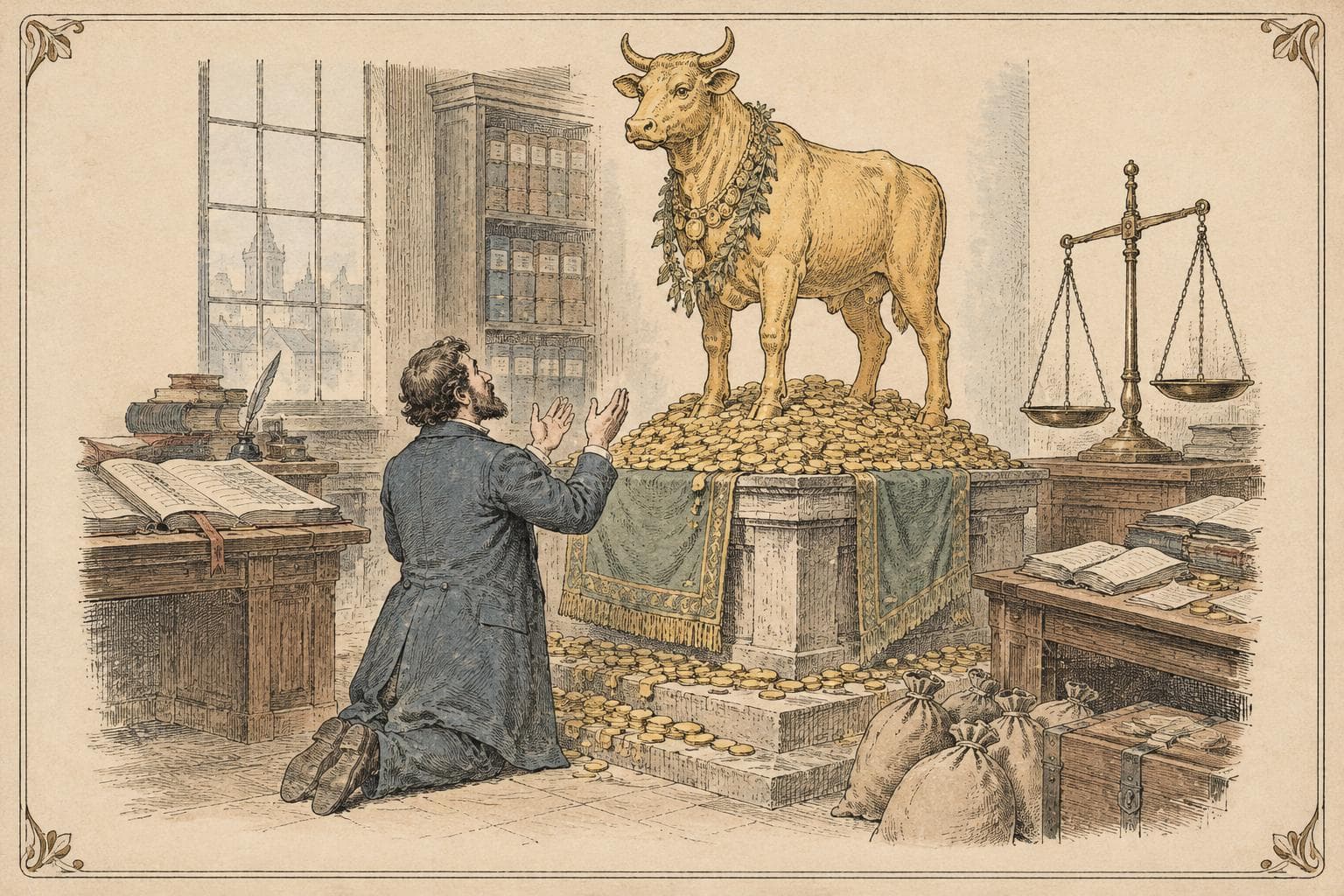
Other seed falls among thorns, where the worries of this age, the lure of wealth and the craving for other things choke the word until it bears nothing. And some falls on good soil, where people hear the word, welcome it and bear fruit, thirty, sixty and a hundredfold. Laid out like that, the four soils read as four distinct responses.
Before he gives the explanation, Jesus asks, "Do you not understand this parable? How then will you understand all the parables?" (Mark 4:13). He treats this story as a master key to the rest. So when someone reads the four soils as four types of hearts, they are reading what is on the page, in a passage Jesus himself marked as central.
How "Which Soil Are You?" Shrinks the Story
I heard the four-soils sermon in more than one church tradition before I ever opened a Hebrew grammar, and it did real good. It sent people home asking whether their faith had roots, and whether money had quietly taken the best of their attention. Many faithful preachers still give it, for sound pastoral reasons.
Trouble begins when that reading becomes the whole story. Handed out as a quiz, the parable turns into a personality inventory: four boxes, a short checklist and an invitation to find yourself in one of them. Most listeners file themselves under good soil, or under rocky ground with a familiar pang of guilt, and a few file their neighbors under thorns. The sower drops out of view, and the drama Jesus built into the story (a hostile field, a farmer who keeps sowing anyway, a harvest beyond all expectation) quietly disappears.
The self-examination was never wrong, only too small. A story about God's purposes for his people has been folded down to the size of a pamphlet.
One Sower, Four Soils, Four Counter-Forces
A better starting point is the cast of characters. The story has one sower and four kinds of ground, and in three of them the seed meets something working against it. There are birds on the path, rock beneath a thin skin of soil, thorns crowding the young stalks. Only in the good ground does the seed find no enemy strong enough to stop it. Read this way, the parable is a story of conflict before it is a story of temperament.
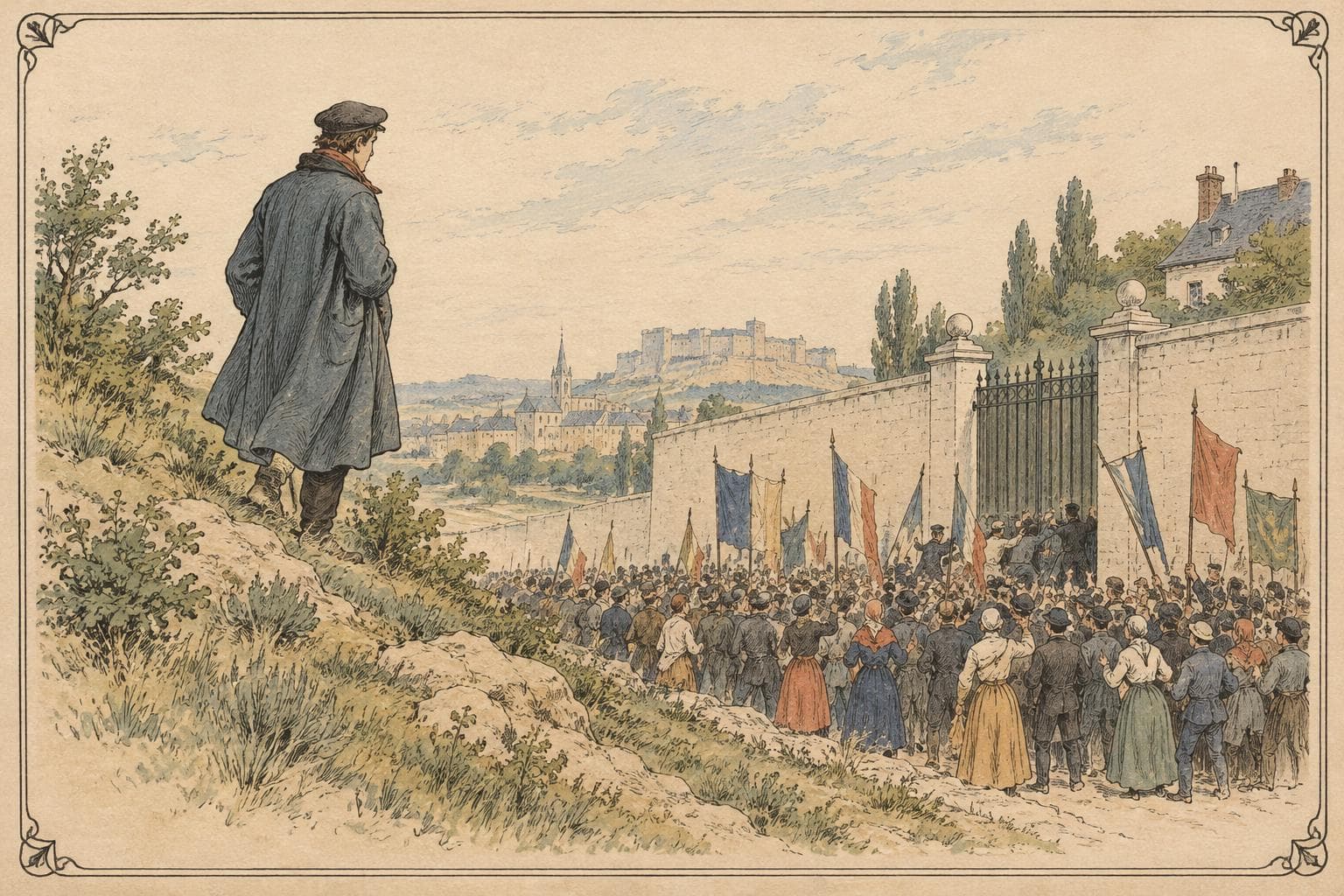
Galilean farming sharpens the picture. Fields were often narrow strips crossed by footpaths, with limestone lying beneath the topsoil and thistle roots waiting from last season. A farmer scattered seed by hand, and some of it inevitably landed where it would not grow. Every villager listening knew this from experience.
They also knew their scriptures, where the one who plants is often God himself. He promises to sow Israel and Judah "with the seed of man" (Jeremiah 31:27) and to sow his scattered people again in the land (Hosea 2:23). Hear the sower that way and the story begins to grow.
Seed and Soils in Mark 4: Hearing Isaiah Underneath
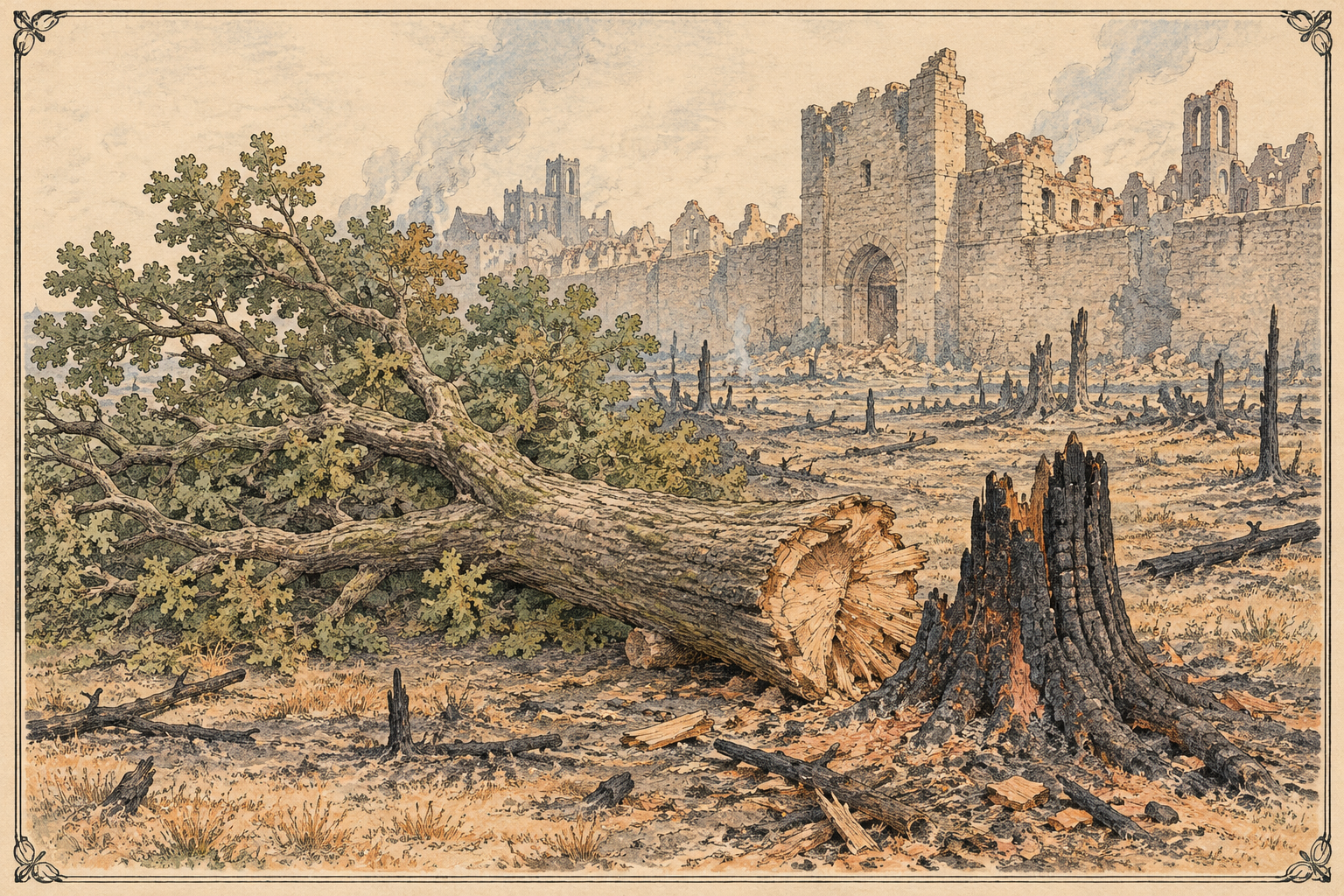
The seed and soils of Mark 4 did not fall out of the sky. Jesus drew on images sown in Israel's scriptures for centuries, and the clearest of them come from Isaiah.
The Felled Tree and the Holy Seed
Between the story and its explanation sits a hard saying. To the disciples, Jesus says, the secret of the kingdom of God has been given. To those outside, everything comes in parables, so that they look but do not perceive and listen but do not understand, "lest they should turn and be forgiven" (Mark 4:11-12). Those words come from Isaiah 6.
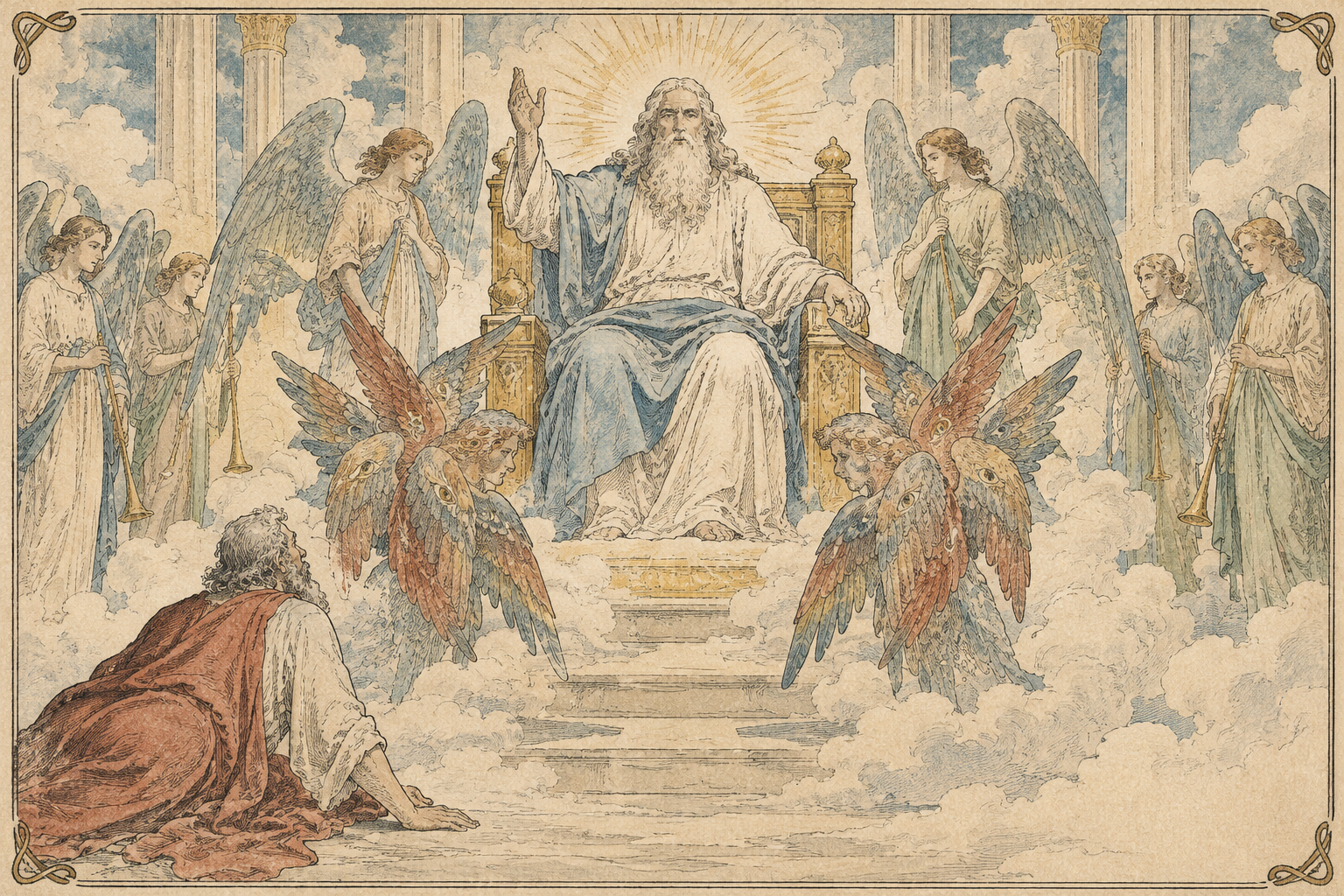
In the year King Uzziah died (around 740 BC), Isaiah sees the Lord (YHWH) enthroned in the temple, surrounded by seraphim (fiery heavenly attendants). He is sent with a message that will harden the people who hear it.
Isaiah asks how long this must go on, and the reply is grim: until the cities lie in ruins and the land is emptied. Even the tenth that remains will be burned again, like an oak felled to a stump. Then comes the last line of the chapter: "The holy seed is its stump" (Isaiah 6:13). Assyria made the first half of that prophecy concrete in the north in 722 BC, and Babylon did the same in Jerusalem in 586 BC. The second half became the hope of every faithful Judean who waited for life to sprout from the wreckage.
So when Jesus reaches for Isaiah 6, he is doing far more than setting a puzzle for clever people. The "mystery" of the kingdom here is God's secret plan, now being disclosed to those with ears to hear. That plan carries the memory of judgment and the promise of a remnant, the faithful few left standing, in the same breath.
Rain, Word and Cypress Where Thorns Once Stood
Later in Isaiah, the seed image returns in a gentler key. As rain and snow come down from heaven and water the earth, "giving seed to the sower and bread to the eater," so God's word will not return to him empty (Isaiah 55:10-11). The chapter ends with exiles going out in joy and a field transformed: "Instead of the thorn shall come up the cypress" (55:13).
Set that beside Mark 4 and the overlap is hard to miss. A sower, seed, the word of God, thorns and fruit all appear in both. The prophet promised that God's word, scattered like seed, would bring his people home and turn thorny ground into a garden, and Jesus tells a story containing every one of those pieces.
Hosea used the same picture. His son was named Jezreel, which means "God sows," and attached to that name was a promise that God would say of his scattered people, "I will sow her for myself in the land" (Hosea 2:23). By the time Jesus taught, seed was a word heavy with centuries of longing. It meant the people of God, planted again after exile.
Why Galilee Heard a Homecoming Story
The Babylonian exile formally ended when Cyrus of Persia let the captives return in 538 BC, and a second temple was built. Yet there are signs that many Judeans felt the exile had never truly finished. Nehemiah's prayer says it outright: "We are slaves this day; in the land that you gave to our fathers... we are slaves" (Nehemiah 9:36).
Galilee felt this keenly. When Herod the Great died in 4 BC, rebels seized the arsenal at Sepphoris, a few miles from Nazareth, and the Roman general Varus answered by burning the city and selling its people into slavery. In AD 6 Judas the Galilean led a revolt against Roman taxation. Later Herod Antipas, who ruled Galilee through all of Jesus' adult life, built Tiberias over a graveyard and named it for the emperor.
For villagers living under that shadow, a story about sowing seed in the land carried the oldest hope they had: YHWH planting his people again at last. It is easy to see how they could hear a homecoming story in it.
A Parable of the Sower Interpretation Built on One Sowing
Once the homecoming is audible, the shape of the parable comes into focus, and the shape is surprising.
No Timeline of Failed Attempts
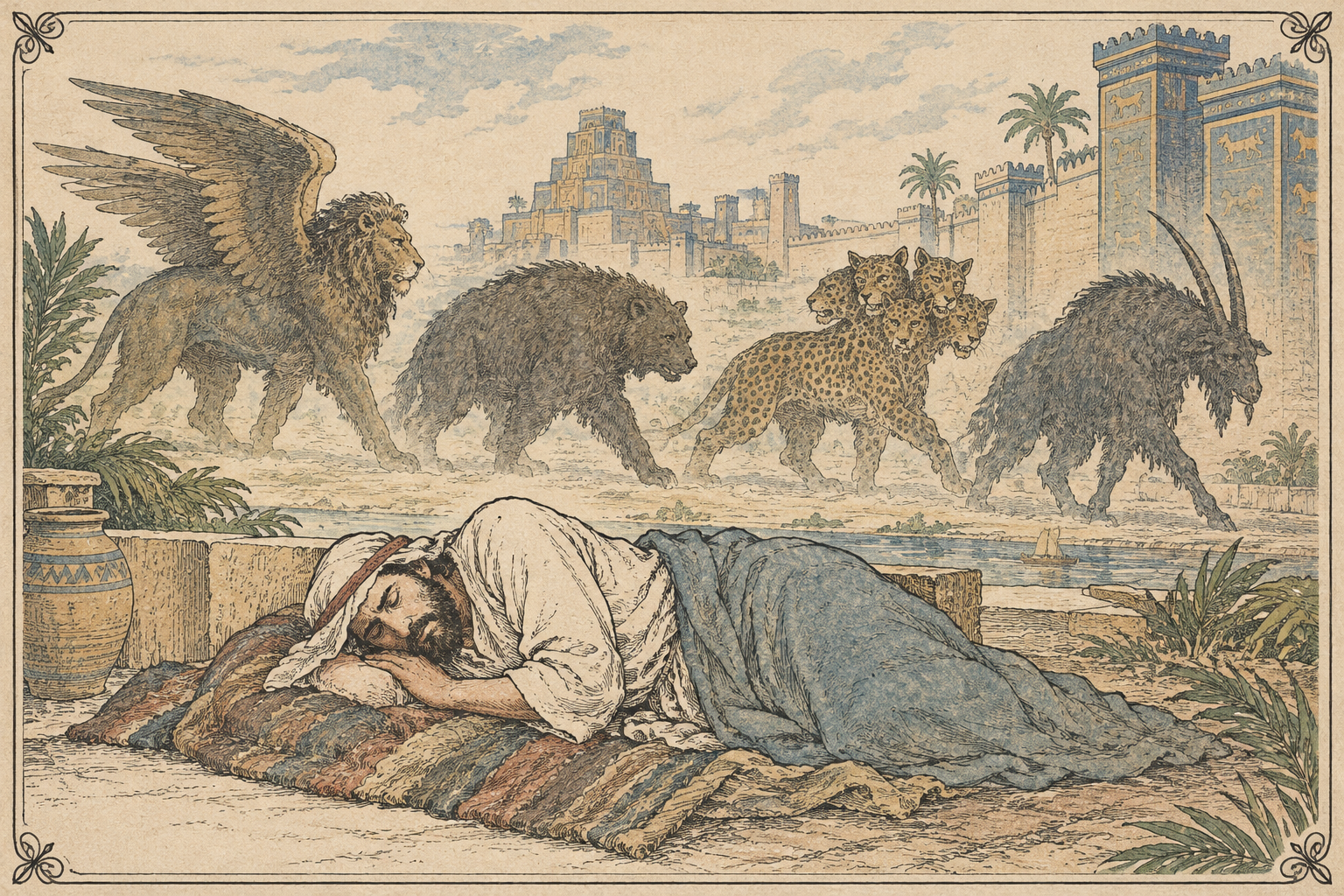
Judean writers loved a particular pattern. Nebuchadnezzar's dream of four kingdoms, as Daniel interprets it, ends with a stone cut without hands that shatters the statue (Daniel 2). Daniel's own vision of four beasts ends with one like a son of man receiving the kingdom (Daniel 7). A series of oppressors or failures is followed by God's decisive act. Mark 4 shares their habits: a cryptic story, talk of mysteries and a point-by-point explanation.
A listener raised on those visions, hearing of four soils, could easily take them as four stages in time. So he might expect the sower to follow suit. Three failed sowings, three chapters of Israel's sorry history, and now at last a fourth sowing succeeds and the kingdom arrives in triumph. Many in the crowd would have welcomed that version.
The story refuses it. Read on its own terms, the parable describes one sowing, not four attempts in sequence, and the seed lands in four kinds of places from the same act. Any serious reading has to reckon with this detail, because it overturns a large expectation: that God would simply crush Israel's enemies and restore the whole nation in one triumphant stroke.
Judgment and Mercy in the Same Handful
What the story offers instead is harder and more honest. The same announcement that gathers the faithful also hardens those who refuse it. Isaiah's commission worked that way, and so does the ministry of Jesus.
Every seed in the handful is identical. Rain falls on rock and loam alike, and what differs is the ground along with whatever lies in wait there. That is why the story holds loss and harvest at the same moment, with judgment and mercy arriving as two outcomes of a single visit.
Mark's own narrative shows it happening. Before the parable, Jesus' family arrives to take him home, convinced he has lost his mind, while scribes from Jerusalem accuse him of working with Beelzebul, the prince of demons (Mark 3:21-22). Jesus looks at those sitting around him and says, "Here are my mother and my brothers!" (3:34). His own family stands outside while his listeners are drawn in.
A Kingdom That Comes as Seed, Not Sword
The parable's sharpest offense lay elsewhere. Israel longed for a kingdom that came with weapons. The Maccabees had defeated a pagan king's armies and cleansed the temple in 164 BC, and that memory shaped hope for generations. One of the Psalms of Solomon, a Judean poem from the first century BC, prays for a son of David who will purge Jerusalem of foreign nations.
Jesus announced a kingdom that arrived like seed: scattered, small, easy to trample, exposed to birds. A few verses later he compares it to a mustard seed (Mark 4:30-32), hardly the language of conquest.
Saying it plainly was dangerous. Antipas had already arrested John the Baptist and would soon have him beheaded (Mark 6:14-29).
To announce openly in Galilee that God's kingdom was arriving, and that it did not belong to Herod, invited the same fate. A farming story could have given cover, letting those with ears to hear catch the claim while others heard only a tale about seed. Read that way, "He who has ears to hear, let him hear" (Mark 4:9) works as a summons to the listeners who understood.
The Birds, the Unseen War and the Uneven Harvest
If the parable describes a kingdom breaking in, the forces resisting the seed deserve more attention than the quiz sermon usually gives them.
When Jesus Names the Birds
In Mark 4:15 Jesus says it outright: the birds are Satan, who comes at once and takes away the word that was sown. Modern readers tend to slide past that line, treating it as a figure of speech or folding it into a general warning about distraction. Jesus gives it no such softening.
Scripture's wider picture helps us take him at his word. Isaiah's commission happens in the throne room of heaven, where God presides over a heavenly assembly and asks, "Whom shall I send, and who will go for us?" (Isaiah 6:8). Micaiah sees a similar scene in 1 Kings 22, with the host of heaven standing around the throne. The Bible assumes a crowded unseen world, and it assumes that some of its powers have turned hostile and contest God's rule over human life.
Mark's Gospel is built on that assumption. Jesus begins his ministry tested by Satan in the wilderness (1:12-13), and before the parable he describes his work as binding the strong man and plundering his house (3:27). When the word fails to take root, then, the cause is not always a lazy or shallow heart, because sometimes there is an enemy in the field. That should humble skeptics who read the parable as mere psychology, and believers who read every failure as a character defect.
Ravens Over Abram's Field
An old Judean retelling of Genesis, the Book of Jubilees (written in the second century BC), contains a striking scene. In chapter 11, the prince of the hostile spirits, called Mastema, sends ravens and other birds to devour the seed farmers sow before they can plow it under, and famine follows. Then the boy Abram, fourteen years old, goes out to the fields and drives the birds away, and that year the harvest is saved.
It is easy to see why some have proposed a connection. A hostile spirit, birds devouring seed, and a figure from Israel's founding story guarding the sowing. A listener who knew the tale might have caught an echo of it in the sower, and noticed the difference: here no Abram drives the birds off, and the seed on the path is lost.
Modest weight is the right weight here. Jubilees stands as a possible subtext behind the parable, not a proven source Jesus was drawing on. What it does show is that Judean imagination already linked birds, seed and hostile spirits, so Jesus' explanation of the path would not have sounded strange to his hearers.
Thirty, Sixty, a Hundredfold Are All Harvest
Then comes the good soil, bearing thirty, sixty and a hundredfold. By most estimates, a tenfold return made for a decent year in the ancient Near East. When Isaac sowed in Gerar and reaped a hundredfold, Genesis treats it as a sign that the Lord had blessed him (Genesis 26:12), and even thirtyfold would have made a Galilean farmer laugh out loud.
Notice what the story leaves out. It never ranks the yields or scolds the thirty. Genuine disciples are not stamped from one mould, and followers who are equally faithful bear fruit in different measure, depending on their gifts and the seasons they live through.
A widow who prays faithfully for forty years in a small apartment and an apostle planting churches across the Mediterranean are both harvest. The checklist sermon often treats good soil as a single standard of spiritual output, while the parable shows a field full of grain, some heads heavier than others, all of it gathered in.
The Parable of the Sower Meaning After Easter
So far the story has stayed in Galilee. The Gospels do not leave it there, and after Easter the story turns back on the one who told it.
The Grain of Wheat That Must Die
In John 12, some Greeks come up to Jerusalem for Passover and ask to see Jesus. His reply seems at first to ignore them: the hour has come, he says, and "unless a grain of wheat falls into the earth and dies, it remains alone; but if it dies, it bears much fruit" (John 12:23-24).
That farming image from Galilee has become the shape of the cross. The arrival of Greeks, an early sign of the nations coming to Israel's God, prompts Jesus to speak of his own burial as a sowing. A single grain kept safe in a jar stays a single grain, and only buried does it multiply.
When the Sower Becomes the Seed
The quiz sermon never reaches this turn. Read against Isaiah and Hosea, the sower in the parable is God, scattering his word across Israel's history through Moses and the prophets. In the Gospel story, that same God comes in person. Jesus is God manifest in flesh, YHWH incarnate, the Word that John says "became flesh and dwelt among us" (John 1:14), so the one who sowed the word becomes the word sown.
He is buried in a garden (John 19:41), pressed like seed into the ground outside Jerusalem. Three days later the ground breaks open. Paul calls the risen Jesus "the firstfruits of those who have fallen asleep" (1 Corinthians 15:20), the first sheaf, the pledge of the harvest to come. A few lines later he reaches for the same farming picture: what you sow does not come to life unless it dies (15:36).
From Felled Tree to Empty Tomb
Step back and take in the whole arc. Isaiah 6 left Israel a felled tree with a holy seed in its stump, and Isaiah 11 promised a shoot from the stump of Jesse. Isaiah 55 promised a word that would not return empty and cypress where thorns had grown. Jesus told a story about seed on contested ground, then became the seed himself and rose as the first of the harvest.
That harvest came quickly. Fifty days after Passover, at the Feast of Weeks (the festival celebrating the wheat harvest), the apostles preached in Jerusalem and about three thousand people were gathered in (Acts 2). Mockers stood alongside those who received the word and held on, so the four soils were all present that day. But the field had changed, and the story was moving out toward the nations.
Seen this way, the four soils finally sit in their proper place. They belong as a scene inside the long story of a God who promised to plant his people again and kept that promise by planting himself.
From Four Soils to Enduring Soil
Which brings us back to the reader's question, and to the sermon we started with.
Hear, Hold Fast, Bear Fruit with Patience
Look closely at how Jesus describes the good soil. In Mark 4:20, they hear the word, accept it and bear fruit. Luke says they hold the word fast "in an honest and good heart, and bear fruit with patience" (Luke 8:15). Every one of those is a verb, describing a habit of hearing and holding on through seasons of birds and thorns.
That matters, because soils in Scripture can change. Peter's name means "rock," and on the night of the trial he looked like rocky ground, quick in joy and collapsing under pressure. Weeks later he stood up at Pentecost, the Feast of Weeks, and preached. What changed in him was the depth of the word, which had dug in through failure and forgiveness and stayed.
The Harvest Belongs to God
A few verses after the sower, Jesus tells a smaller parable. A man scatters seed, sleeps and rises night and day, and the seed sprouts and grows, "he knows not how" (Mark 4:27). The earth produces by itself, and then the harvest comes.
For anyone worn out by self-sorting, this is good news. Paul planted and Apollos watered, but God gave the growth (1 Corinthians 3:6). Our part is to stay in the field and keep receiving the rain. Nobody is asked to stand over their own soul with a soil chart every Sunday afternoon, measuring the depth of their roots. The farmer in Mark 4 goes to sleep.
Will I Let the Kingdom Take Root?
The reader's question was whether the parable of the sower is about four types of hearts, and the answer is still yes. The old question about our hearts was never a mistake. But the parable reaches further than any quiz, into Israel's long story of exile and homecoming.
Inside that story, the question changes shape. Birds still circle, and thorns grow back every spring. Yet the God who promised cypress in place of thorns has already brought life out of a tomb, and the harvest is his. Our part is to hear and hold on, waiting with patience for growth we cannot manufacture. So set the soil chart down and ask the better question: will you let this word take root in you, and stay?