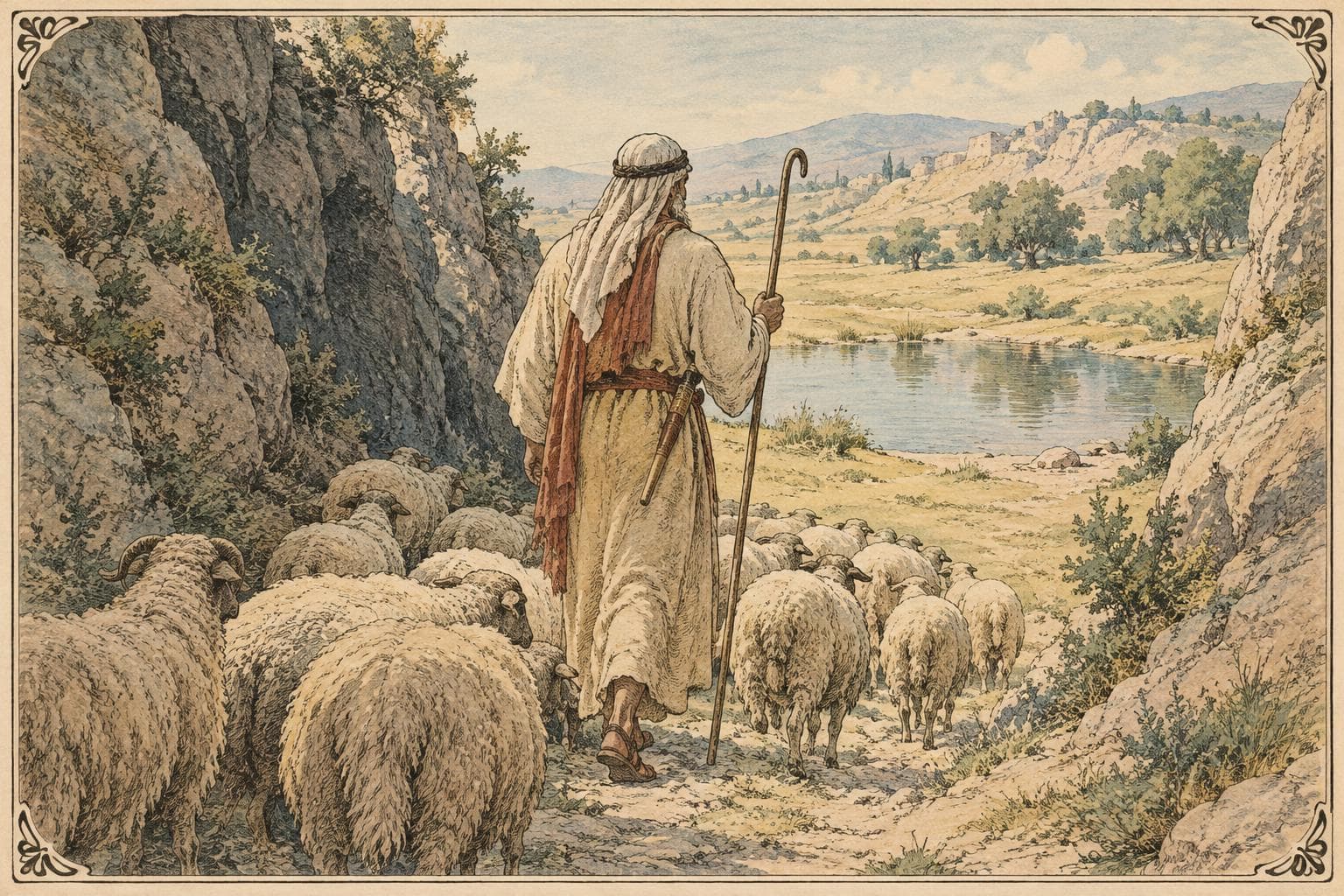
Here's a small thing most of us have never stopped to think about. Every week, in churches and living rooms, people sing "Hallelujah." We treat it like a holy cheer. But it's two Hebrew words stuck together, and the second one is the name of God (Alohim). So the people who have never been taught that name have been singing part of it for their whole lives.
That raises a question worth following. If the name is sitting in plain sight inside a song, why do so few of us know how it sounds? The answer runs from a gold band on a high priest's head, through a school of scribes on the Sea of Galilee, and into the Strong's Concordance on your shelf. Sacred name pronunciation can sound like a fringe hobby, but the trail is made of ordinary evidence, and you can check most of it yourself.
Four Vowels on the High Priest's Head
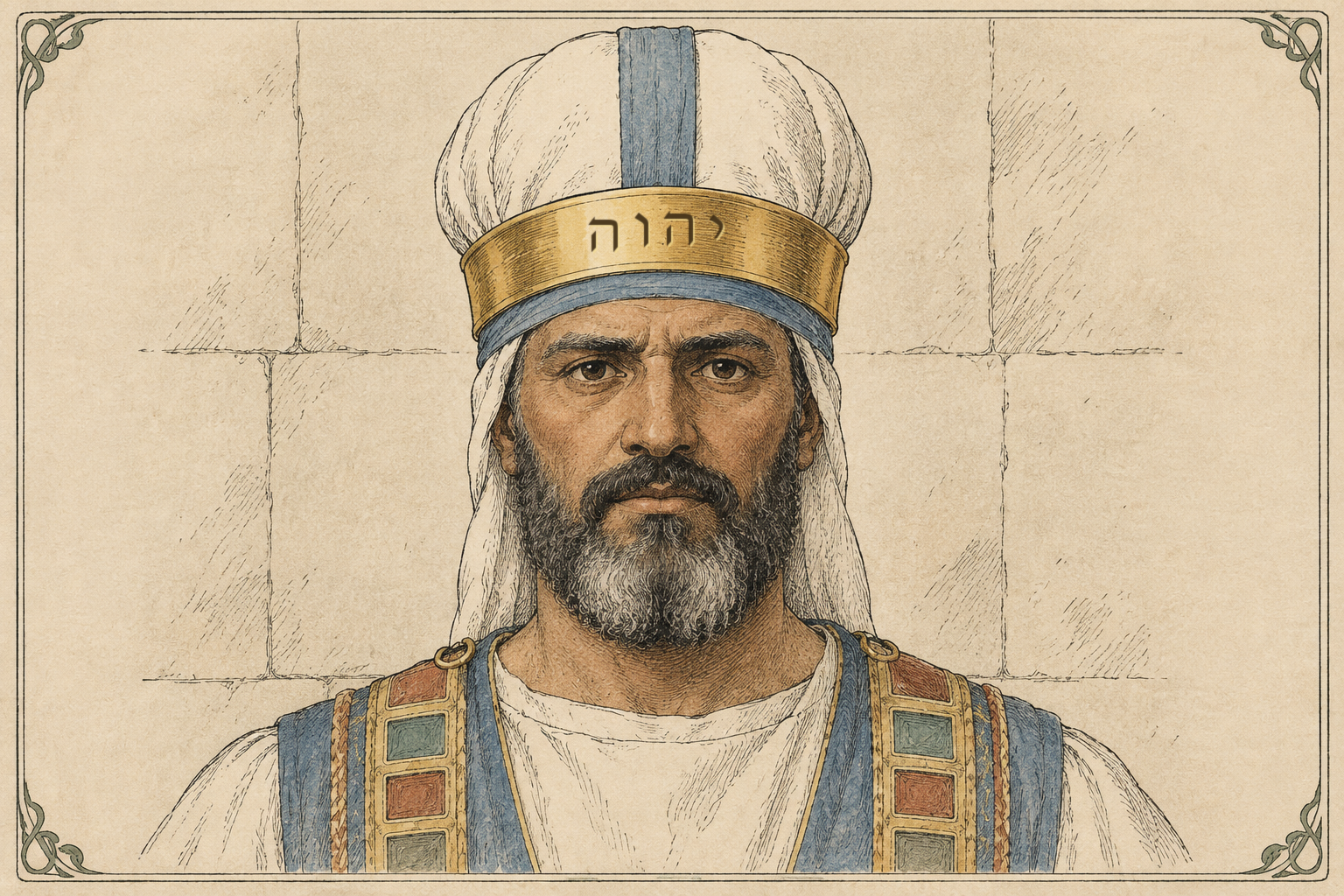
Let's start with a man who knew that Temple. Josephus was a Judean historian from a priestly family, born around AD 37. He was an adult when the Romans burned the Temple in AD 70, so when he describes that building and its priests, he's describing something he knew firsthand.
Look at what he says about the high priest's headdress in Wars of the Judeans 5.5.7. Around the linen mitre, tied with a blue ribbon, sat a golden crown "in which was engraven the sacred name [of God]: it consists of four vowels."
That is an odd thing to say, because in Hebrew those four letters are consonants on any modern chart: Yod, Hey, Waw, Hey. Remember back in Exodus 28:36, God tells Moses to make a plate of pure gold for the high priest's forehead and engrave it, and that plate carried this name. Fifteen hundred years later, a Greek-writing priest who could read it says the name is made of vowels.
Here's why that isn't a slip. Ancient Hebrew had no vowel marks, and scribes used a few letters to stand in for vowel sounds. Yod could carry an "ee" or "ay," Waw an "oo" or "oh," and Hey an "ah" at the end of a word. A reader who knew how those letters worked could see why a Greek writer would call them vowels. The name has no hard stops in it at all, though the first Hey sits mid-word, where it normally sounds as a breath. Josephus doesn't spell it out for us, and elsewhere he says it isn't lawful for him to say more about it (Antiquities 2.12.4). So he isn't handing us a pronunciation guide. He is telling us something narrower: a priest who knew this name could describe its four letters as vowels.
Notice one more detail in that sentence of his. He treats the name as a real thing with a sound, engraved on a real object, in a place you could stand and look at. It wasn't yet lost. Later Jewish tradition remembers the priests saying it aloud in the Temple's blessing and the high priest saying it on the Day of Atonement (Mishnah Tamid 7:2, Yoma 6:2). Outside the Temple, though, people had already begun to step around it. Greek copies of the Hebrew Bible came to write Lord (YHWH) where the name stood, though some of the oldest surviving copies still keep it in Hebrew letters or as Iao, and the Mishnah later warns against pronouncing it as it is written (Sanhedrin 10:1). So when the Temple burned, the one place where the name was still regularly spoken burned with it.
Tiberias and the Dots Under the Letters
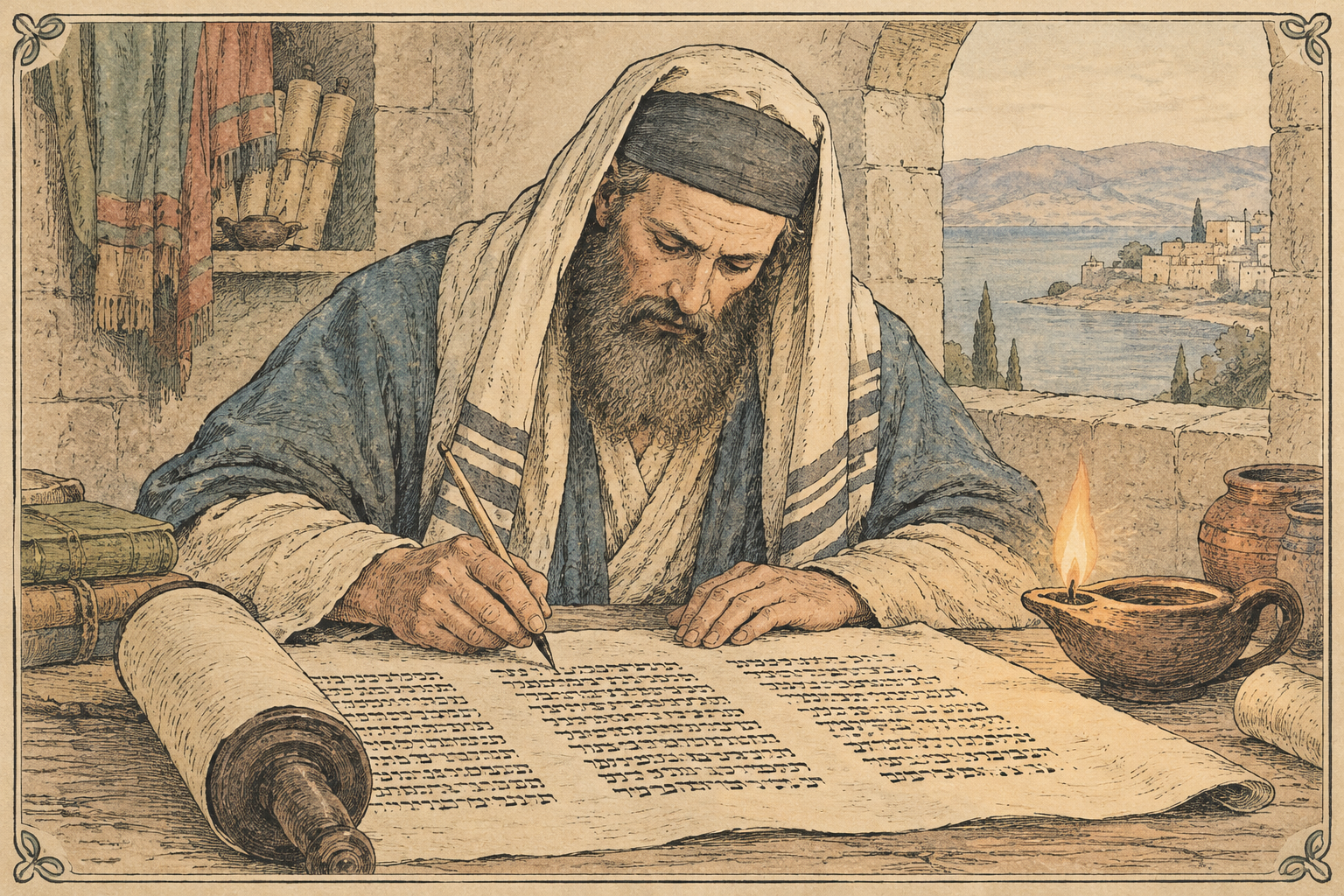
Now jump forward about six hundred years, to a city on the western shore of the Sea of Galilee. By then Jewish communities were scattered from Spain to Babylon, and Hebrew had mostly stopped being anyone's first language. The consonants had been copied with enormous care, but how do you make sure a child in a distant city reads the words the way they should sound?
A guild of scribes called the Masoretes took on that problem. Starting around the seventh century AD and working for hundreds of years, they added a system of dots and dashes above and below the letters, called nikud, to mark the vowels. Their best-known work comes down to us in the Aleppo Codex (around AD 930) and the Leningrad Codex (AD 1008). We owe them an enormous debt. Nearly every Hebrew Bible and every English Old Testament leans on what they did.
So watch what happens when they reach the name. By their day the custom was centuries old: when you read aloud and came to those four letters, you said another word, usually Adonai, which means "my Lord." The scribes could not change the letters, because the letters were sacred. They wouldn't write vowels that invited anyone to say the name, either. So they did something clever. They wrote the four letters and placed under them vowels taken from the word the reader was supposed to say.
That's the alteration in the title of this piece, and we should be exact about it. The Masoretes did not touch one letter of the name, and they weren't forging anything. Any trained reader knew what those marks meant: don't say what's written, say Adonai. But the page now showed the name with vowels that had never belonged to it. And once readers came along who didn't know the custom, they read the marks at face value. That is where "Jehovah" comes from. Christian readers in the late Middle Ages and the Reformation combined the four letters with Adonai's vowels and produced a form no ancient priest ever said. The King James prints it a handful of times, as in Isaiah 12:2.
Three Strong's Entries, One Name
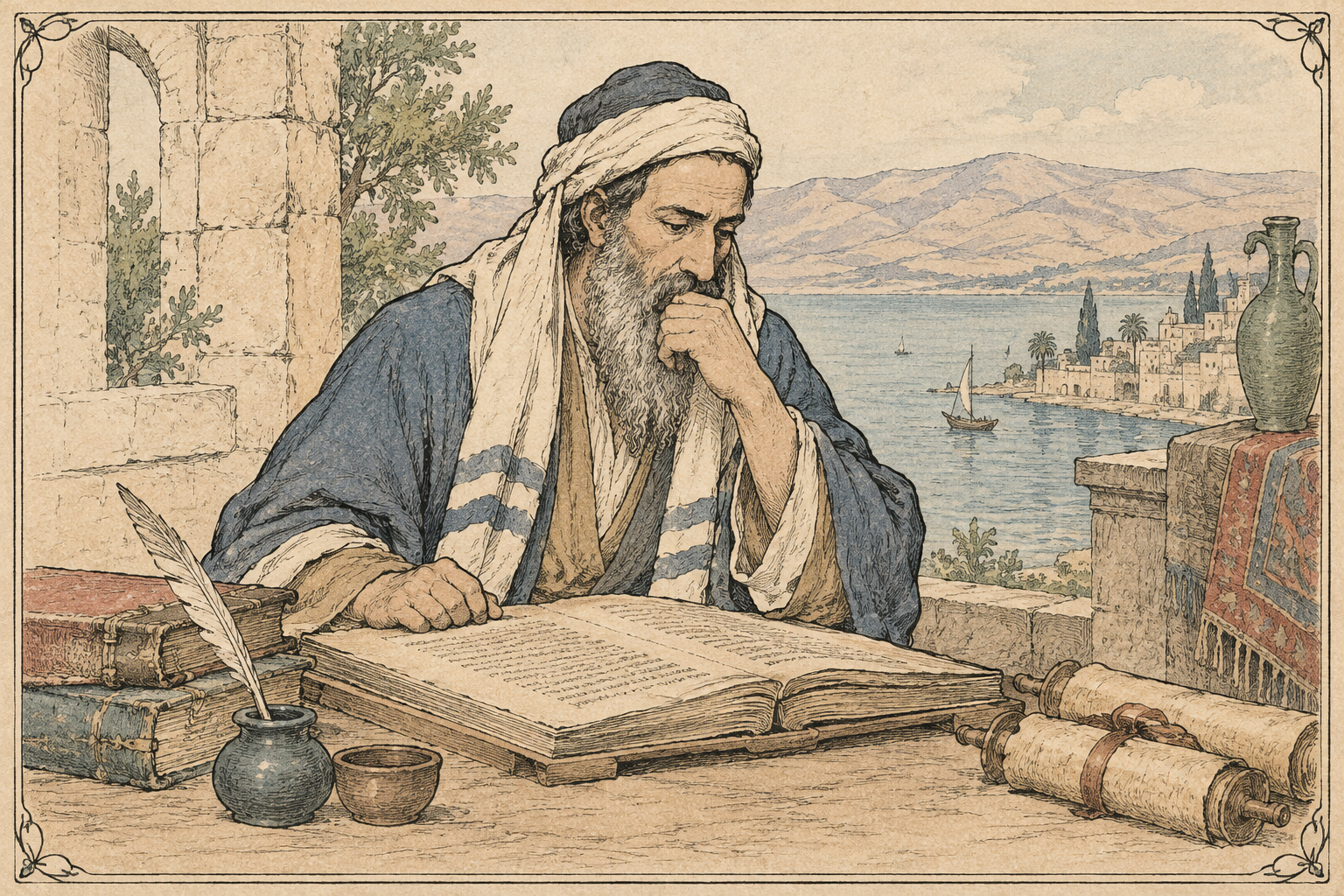
You can watch this in your own concordance, and this is so cool. Strong's numbers give us three entries to lay side by side.
H3068 is the full name, the four letters, appearing more than six thousand five hundred times. Its pointing begins with a short "Ye" sound, and Strong's prints it the way it came to be read in English, with a "Jeho" at the front.
Now look at H3069. It has the same four letters and a different set of vowels, and the place it shows up explains why: right beside the word Adonai, in phrases like "my Lord" followed by the name, and the book of Ezekiel is full of them. Reading "Adonai Adonai" aloud would be silly, so in that spot the custom was to say the word for God instead, and the Masoretes wrote that word's vowels under the same four letters. Your King James shows you this too, wherever it prints "Lord GOD" with GOD in capitals. Two sets of vowels on one name tells you the vowels were following the reader's substitute word. They aren't a recording of the name's own sound.
Then there's H3050, the short form: Yah, only Yod and Hey. It shows up a few dozen times, mostly in songs and poems, starting with Israel's song at the sea: "Yah is my strength and song" (Exodus 15:2, where the King James prints "The LORD"). In Psalm 68:4 the King James lets it through as "JAH." And look at the vowel. The Masoretes pointed it with a plain, open "ah." There was no substitute word to protect here, and so the short form kept its sound in the open.
The same open sound turns up in another place they had no reason to disguise: people's names. Hebrew parents built God's name into their children's names, so that a name became a little sentence. Isaiah is Yashayahu. Jeremiah is Yirmeyahu. Elijah is Eliyahu. Say those endings out loud. Yahu. Those endings carry the Masoretes' own vowels, and they preserve a "Yah" followed by an "oo" sound attached to the name.
Now, in fairness, you should know where the scholarly debate stands. Most scholars today reconstruct the full name as Yahweh, from how a few early Christian writers spelled it in Greek, from the short forms Yah and Yahu, and from reading the name as a Hebrew verb form linked to "I am" in Exodus 3:14. That is the mainstream view and we aren't hiding it. Here at The Bible Gazette we read the name as Yahuah, and this is the reason. The Hebrew Bible's names end in "Yahu," that "oo" is one sound the Waw in the middle of the name can carry, and a name of "four vowels" sounds to us like one that stays open from start to finish. These clues lean our way without settling it. Many of the same names open with "Yeho," the Waw can also carry an "oh" or a "w," and scholars who read Yahweh count "Yahu" as support for their reading too. No recording from the Temple exists, so anyone's answer here is a case built from clues.
Yehudah: Praise With a Letter Inside
Here's a clue people love, so let's hold it carefully. The name we say as Judah is Yehudah in Hebrew, spelled Yod, Hey, Waw, Dalet, Hey. Take out the Dalet and the four letters left, in the same order, are the letters of the name.
By itself that proves nothing. Hebrew has a small alphabet and letter overlaps happen, and Genesis gives us its own explanation for this name. When Leah has her fourth son she says, "Now will I praise the LORD," and she names him Judah (Genesis 29:35). The biblical author ties the name to the verb for giving thanks and praise, yadah.
Look at what the story puts together, though. Leah's sentence has God's name in it, and it's a sentence about praising. The name she gives her son sounds like that sentence and carries nearly the same letters. Then that son becomes a tribe, a kingdom, and finally the word "Judean," so a whole people went on answering to a word for praise with God's name almost inside it. Some readers hear in Yehudah the same "Yehu" and "Yahu" sound we traced through the prophets. Enjoy it as a clue, and leave the weight on the stronger evidence.
Hallelujah: The Name You Already Sing
Now we can come back to the song. Hallelujah is the Hebrew verb halal (Strong's H1984) followed by Yah (H3050). Halal means to praise out loud, to boast about someone, and in some forms it has the sense of shining. So think of a person who can't stop talking about someone they admire, loud enough for the street to hear. That is the verb. It's in the plural, too, so it's a command to a crowd: all of you, praise Yah.
It appears more than twenty times in the Psalms, and it's how the whole book finishes. Psalm 150 ends with "Let every thing that hath breath praise the LORD. Praise ye the LORD," where that last line is two Hebrew words joined by a hyphen, hallelu-Yah. Notice how the English hides this. The King James translated the word in the Psalms, so a reader never sees the name. Hallelujah only survives in our ears because other languages left it untranslated.
Here's where the design pays off. Turn to the last book of the Bible. In Revelation 19 the crowd in heaven, the elders and the living creatures shout it four times, spelled in Greek as "Alleluia," with the Hebrew word carried straight over. It's the only place in the New Testament you'll find it. So the song that closes the Psalms comes back at the end of the whole story, and the name is still inside it.
Think about what that means for all those centuries of silence. Readers stepped around the name. Scribes covered it with borrowed vowels. Translators wrote "Lord." And the whole time, in Seoul and Lagos and rural Appalachia, believers kept singing the short form out loud without knowing it. Most of the people singing it never thought twice about that word, because they assumed it was only a cheer.
Yahusha: The Name With a Sentence in It
One more name, and it's the one the whole trail has been leading to. In Numbers 13:16, Moses does something easy to read right past: "Moses called Oshea the son of Nun Jehoshua." The young man's name was Hoshea, from yasha (Strong's H3467), which means to rescue or deliver, and in the Hebrew Bible that word is usually about real danger: enemies, famine, death. Moses adds one letter to the front of it, a Yod, and now the name opens with God's name. It has become a sentence, built of five Hebrew letters (Strong's H3091): the God of Israel saves. Hebrew Bibles point it Yehoshua, and we read it Yahusha. English Bibles print it Joshua, more than two hundred times.
Then read what the angel says about Jesus (YHWShA) in Matthew 1:21: "thou shalt call his name JESUS: for he shall save his people from their sins." The angel's explanation only makes sense if you can hear the Hebrew. It's the same name as Joshua, and the King James shows you, because twice it calls Moses's successor "Jesus" (Acts 7:45, Hebrews 4:8). We wrote more on how that name traveled into English in Why Say Yahusha.
Now watch how these threads tie together in one line of the Bible. Remember that song at the sea? "Yah is my strength and song, and he is become my salvation." Psalm 118:14 sings that line again. Then Isaiah 12:2 picks it up and doubles the name, Yah and the full name side by side, and the King James prints it "the LORD JEHOVAH is my strength and my song, he also is become my salvation." The word for salvation there comes from yasha. So one of the Bible's oldest songs already holds the short name, the singing, and the rescue in one breath. Centuries later a child is given a name built from the same two parts, God's name and the rescue, and the crowd at the end of Revelation is still shouting the short form.
The name was never fully gone. It was engraved on gold, hidden under borrowed dots, tucked into the names of prophets, and kept alive in a song. The biblical authors are inviting us to stop treating it as a mystery for specialists. Open a concordance and look at the entries for yourself. Next time the room stands to sing, listen to the end of the word coming out of your own mouth, and say it knowing who you're talking to.