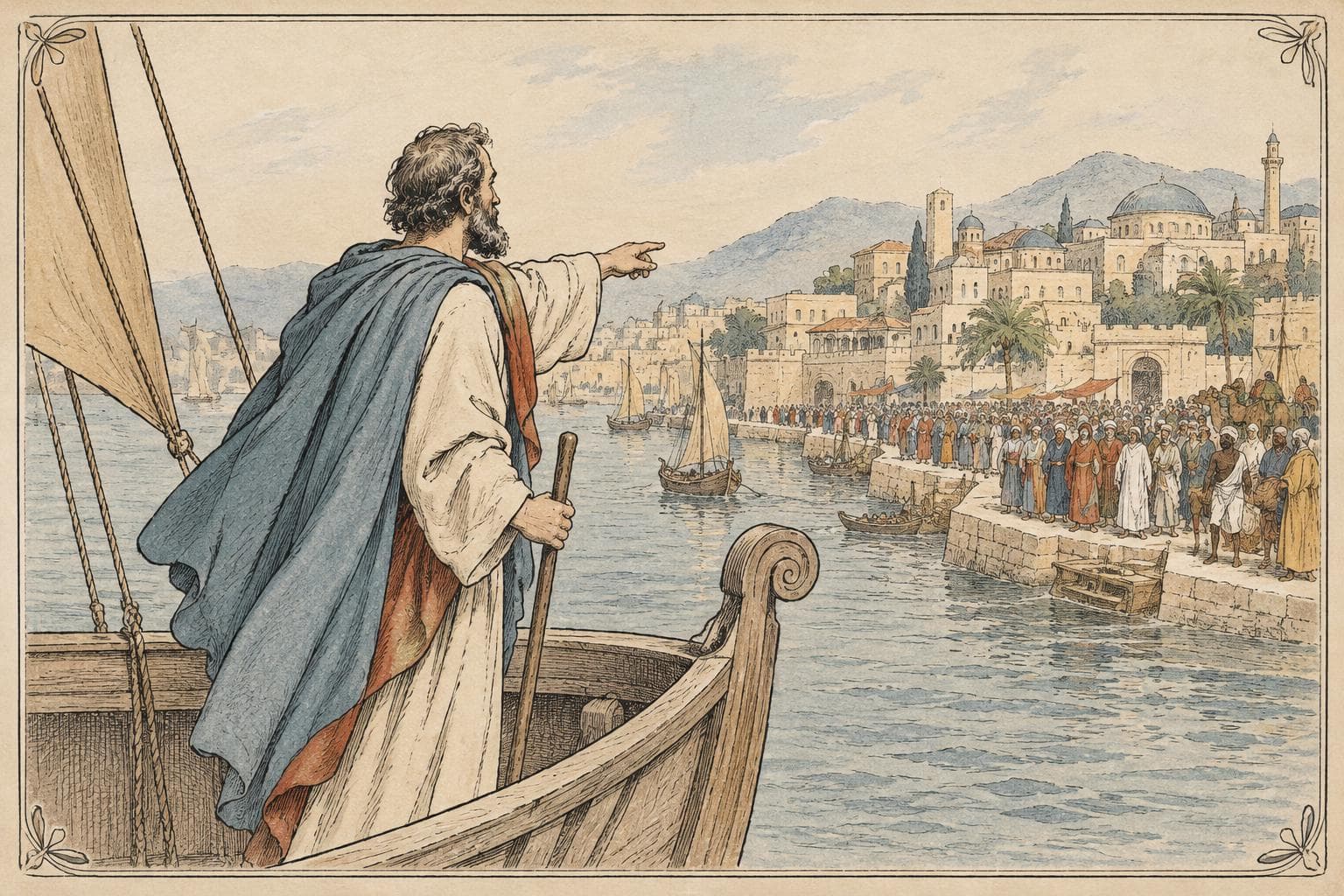
Read Galatians 2:20 slowly and the sentence seems to argue with itself. Paul says he has been crucified. Then he says he is alive. Then he takes that back: it isn't him living anymore, it's someone else. Most of us have met this verse on a plaque or a coffee mug, where it reads like a private spiritual experience, the deepest thing one soul can feel about God (Alohim).
Look at where Paul put it. The Galatians 2:20 meaning is hiding in the ten verses right above it, and those verses are about a meal. Two apostles had a public fight over who could eat with whom, and this sentence is how Paul ends the argument. Once you see the table, every odd phrase in the verse starts to make sense.
The Verse in Full, Before We Take It Apart
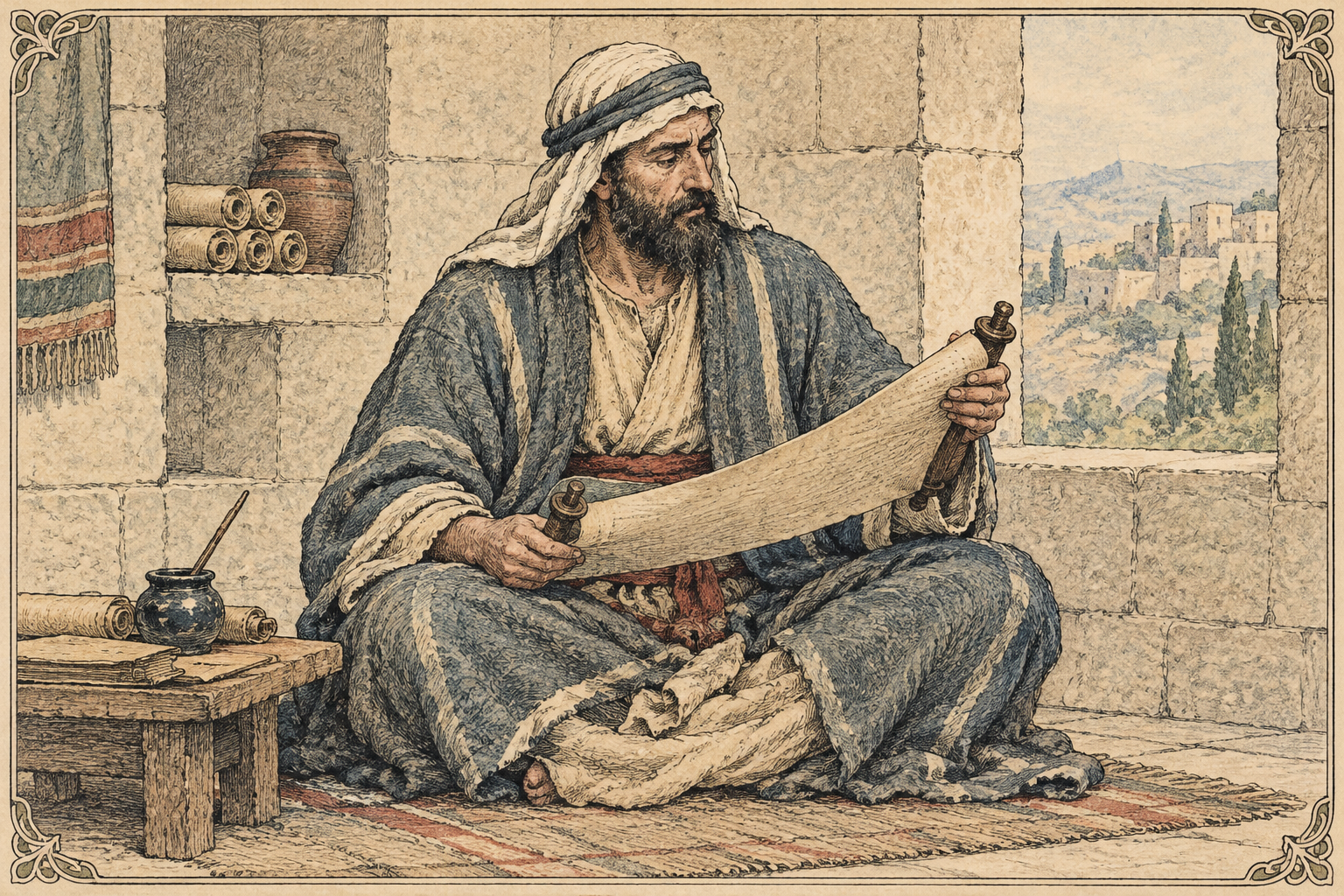
Here it is, along with the line that leads into it, because the two belong together.
"For I through the law am dead to the law, that I might live unto God. I am crucified with Mashiach: nevertheless I live; yet not I, but Mashiach liveth in me: and the life which I now live in the flesh I live by the faith of the Son of God, who loved me, and gave himself for me."
Notice the verb in "I am crucified with Mashiach." In Greek it's one word, synestauromai, and it's built from "with" and "crucify." Mark uses that same word for the two men on the crosses beside Jesus (YHWShA): "they that were crucified with him reviled him" (Mark 15:32). So Paul reaches for the vocabulary of an execution. He even puts himself on the hill.
The tense matters too. It's a Greek perfect, which describes something finished in the past that still holds in the present. A closer rendering is "I have been crucified with the Messiah, and that's still where I stand." So this isn't a mood Paul drifts in and out of. He's describing a settled fact about who he is.
And then there's that word "I." Who is it? We tend to assume Paul is telling us his testimony. Look back at verse 15, though, where the speech to Peter begins. Paul says "we," meaning those born Judean, "and not sinners of the Gentiles." He is talking as a Judean to a fellow Judean. The "I" of verses 19 and 20 steps forward from that "we." He is holding himself up as the test case: the most zealous Torah-keeper anyone knew. If even he had to go through a death to get here, then nobody gets around it, Peter included. And the "I" is bigger than one man. Paul is telling what has happened to Israel, in the first person, because he won't stand at a distance from his own people's story. When the Messiah was crucified, Israel's story went to the cross with him, and when he rose it came out renewed. That death and new life then belong to everyone in the Messiah, Judean and Gentile alike.
"I Am Crucified With Mashiach": The Fight at the Table
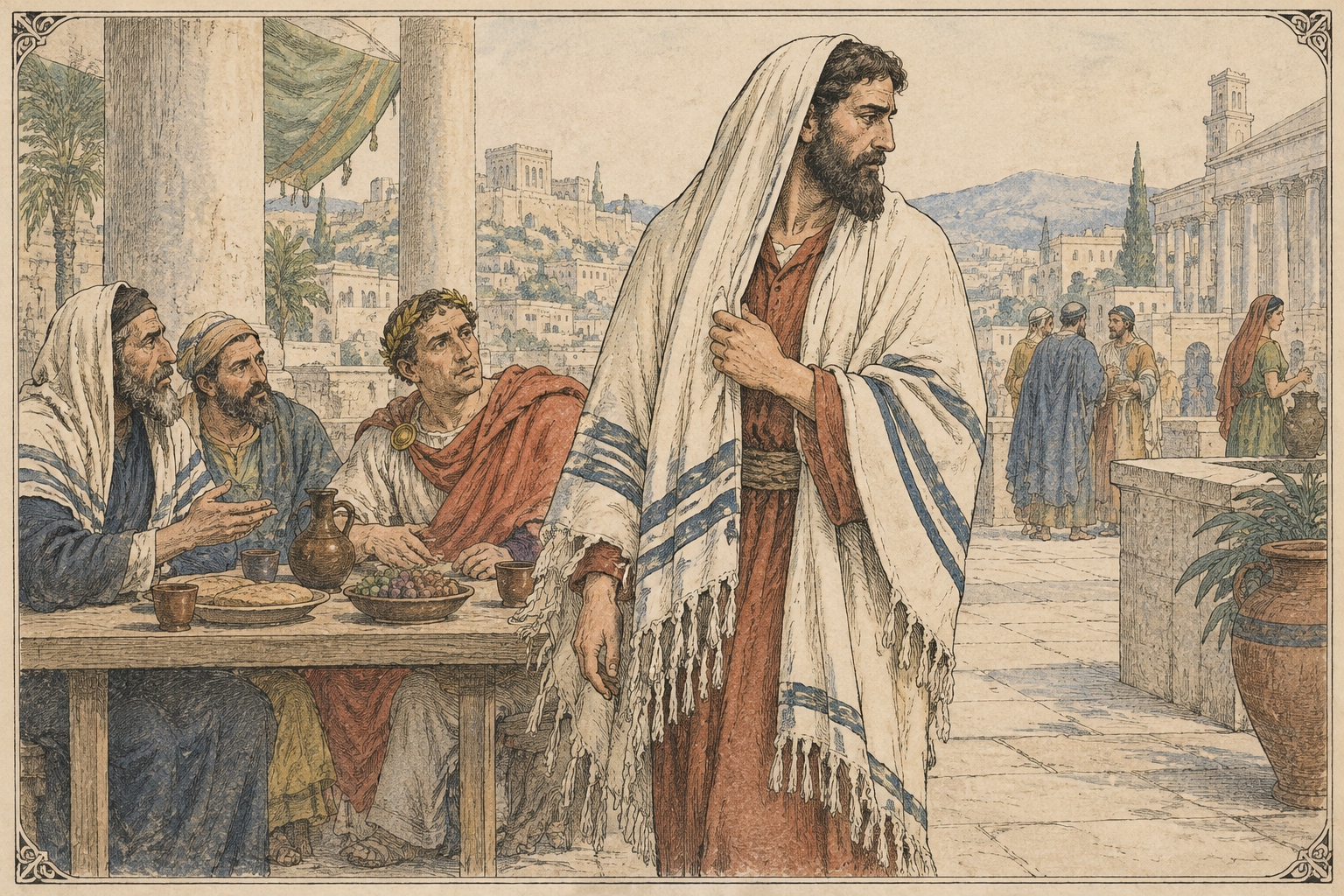
Let's go to Antioch, a big mixed city in Syria, where something new had been happening. Judeans and Gentiles who trusted Jesus were sharing meals as one family, and Peter was right there eating with them. Then some men arrived from James in Jerusalem. "He withdrew and separated himself, fearing them which were of the circumcision" (Galatians 2:12). The other Judean believers followed him, even Barnabas. Paul stood up and confronted Peter to his face, in front of everyone.
To feel why this was such a big deal, we need to trace the table back a long way. Remember back in Genesis 12, God tells Abraham that all the families of the earth will be blessed through him, and Paul quotes that promise in Galatians 3:8. So Israel exists from the start for the sake of the nations. Then in the Torah a boundary goes up. Watch how Leviticus 20:25-26 ties food to people: Israel must "put difference between clean beasts and unclean," because the Lord (YHWH) has "severed you from other people, that ye should be mine." What you ate marked who you were. Every meal drew the line again.
That line was God's own gift, and it did its job. It kept a holy people distinct while the promise waited. Peter knew the rule by heart, and he knew it had changed. In Acts 10:28 he tells a Roman household that it was unlawful for him to keep company with them, "but God hath shewed me that I should not call any man common or unclean." So when Peter pulled back at Antioch, he was putting up a wall he had already watched God take down. His actions told the Gentiles at that table that they were guests in a family they could only join by becoming Judean.
Paul's reply runs through verse 16: nobody is "justified by the works of the law, but by the faith of Jesus Christ." In this setting "works of the law" means Torah-keeping as the test of who belongs, and it points above all at those markers, circumcision and food and calendar, the things that showed who was inside. Then verse 18 names Peter's move exactly: "If I build again the things which I destroyed, I make myself a transgressor." Rebuild the wall and the Torah you're appealing to only reminds you that you've broken it too.
Which brings us to the strangest line of all. "I through the law am dead to the law." Paul isn't turning on the Torah. He's saying the Torah itself was pointing past itself, toward a death. Its own verdict on Israel was the road to that death, and in passing that verdict it was doing the job God gave it. Moses led Israel to the edge of the land and stopped on a mountain, looking across a river he would never cross. Israel's Messiah was crucified under that same law, and a loyal Judean who belongs to him goes where he went. His old identity, the one built on being on the right side of that wall, went up on the cross with him. Paul runs through a similar list in Philippians 3 and counts all of it loss.
"I Live": The Future Started Early
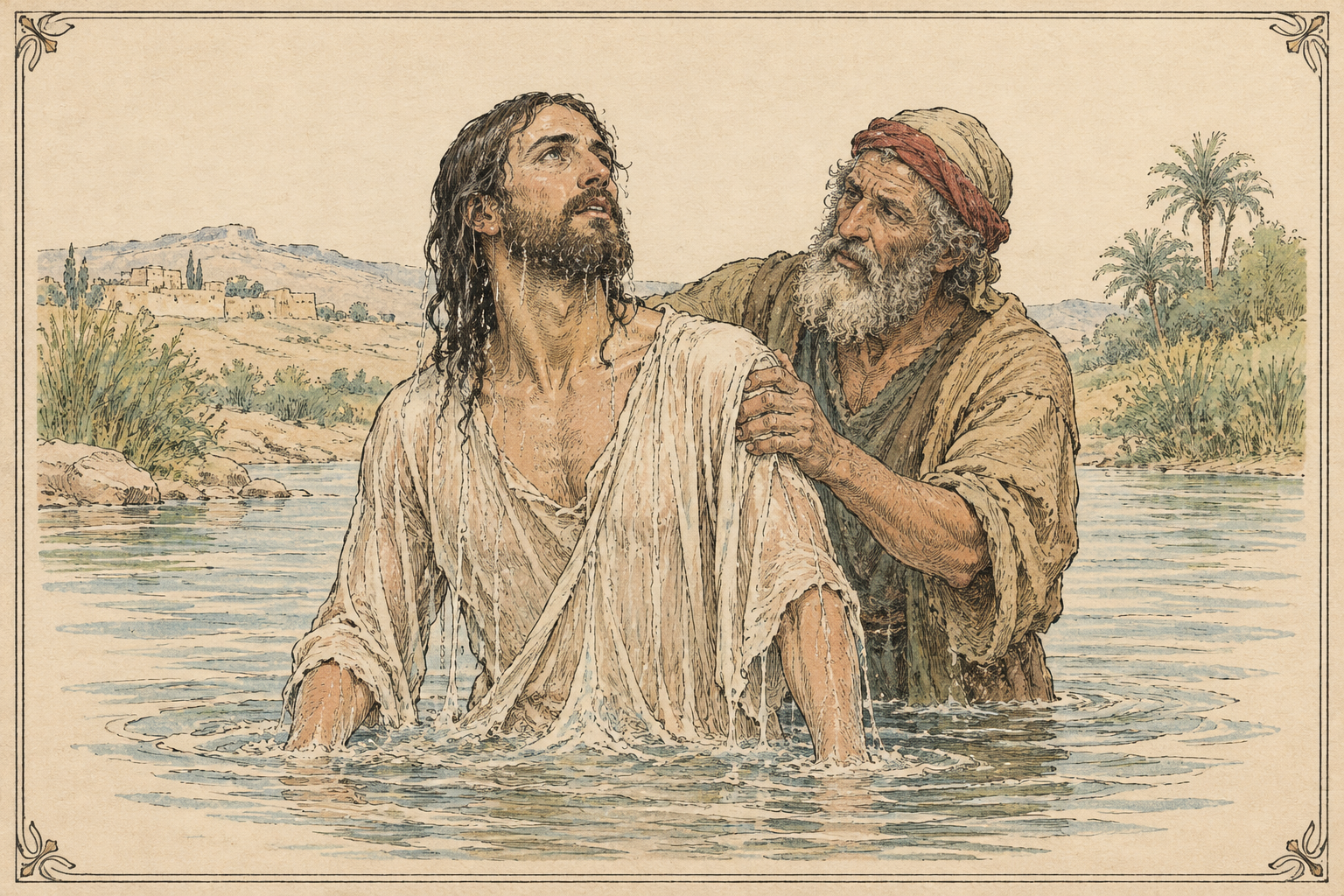
Paul won't stop at death, and neither does the pattern. Look at Romans 6:3-6, where he walks through the same moves using baptism. "We are buried with him by baptism into death: that like as Christ was raised up from the dead by the glory of the Father, even so we also should walk in newness of life." Then, a few lines on, the verb from our verse comes back: "our old man is crucified with him." It's a hyperlink. Paul doesn't name baptism in Galatians 2, but this is the sequence baptism acts out, and he gets there a chapter later: "as many of you as have been baptized into Christ have put on Christ" (Galatians 3:27). When Paul wrote "I am crucified with Mashiach," his readers had a concrete moment to attach it to, the moment they went under the water.
That moment was never a bare symbol. Peter himself preached it on the day of Pentecost: "Repent, and be baptized every one of you in the name of Jesus Christ for the remission of sins, and ye shall receive the gift of the Holy Ghost" (Acts 2:38). So the person who says "nevertheless I live" has come through repentance and through the water, and has received the Spirit. That is how someone comes to be in the Messiah, and the old life is left behind in the process.
Look closer at "I live." Many Judeans in Paul's day hoped for a resurrection at the end of the age, when God would raise the dead and put the whole world right. Then God raised one man in the middle of history. To Paul that meant the end had started early. Teachers call this inaugurated eschatology, a heavy label for a simple idea: the future has already begun, and those in the Messiah are living in it now, while the old age still carries on around them. Paul can say "I live" as a present fact because the new creation has a first resident.
"Yet Not I, But Christ Liveth in Me": God Moves In
Now we get to the phrase most people turn into a warm feeling. Paul means something much more solid, and you can see it by tracing where God lives through the whole biblical story.
Remember the garden, where God walked with people on the ground. Then the tabernacle, where the glory filled the tent so fully that Moses couldn't enter (Exodus 40:34-35). Then Solomon's temple, where the same thing happened, and the prophets who watched it fall and longed for God to come back and live among his people again. All of that sets up what Paul says in Romans 8:9-11. "The Spirit of God" dwells in you, and "the Spirit of Christ" is the same Spirit, the Spirit of the one who raised Jesus, who "shall also quicken your mortal bodies." This is the language of residence. The story has been asking where God will finally dwell, and Paul's answer is startling: in the bodies of people like the ones eating at that table in Antioch.
Jesus is the Lord of Israel come in the flesh, so the Spirit dwelling in a believer is God himself present in person, with no go-between sent on his behalf. So when Paul says "Christ liveth in me," he is saying what the tabernacle was built to show, only now the dwelling place is walking around and eating dinner.
Paul says it again two chapters later, and this time you can hear it. "God hath sent forth the Spirit of his Son into your hearts, crying, Abba, Father" (Galatians 4:6). That is the family word, spoken from inside, by Gentile and Judean alike. If the same Spirit is crying out of both of them, then the wall at Antioch has lost its reason to exist. Peter's own Spirit-filled table companions were the proof. He says as much at the council in Jerusalem: God "put no difference between us and them" (Acts 15:9).
Keep in mind that Paul's self doesn't vanish in all of this. He says "yet not I," and in the same breath he keeps talking as "I" for the rest of the sentence. Later Western thinking likes to pick one or the other. Paul holds both: a real person with a real name, and God at home inside him.
"The Life Which I Now Live in the Flesh": Back at the Table
Look at the next words, because this is where a mystical reading runs out of road. "The life which I now live in the flesh." Now, in the same body, in a real city with its smell of cooking and its awkward seating arrangements. Paul says the crucified and raised life happens here, and the question that started all of this was about a meal. So a real test of Galatians 2:20 is who you'll sit with this week.
He also says "in the flesh" with a touch of honesty. He's still the same flesh-and-blood man with the same family tree, and he can't stop being born a Judean. What has changed is where he finds his identity. His ancestry no longer tells him who he is, and that goes for his status and his record as well. The Messiah's life tells him now.
Paul describes that kind of life in 2 Corinthians 4:10: "Always bearing about in the body the dying of the Lord Jesus, that the life also of Jesus might be made manifest in our body." He wrote that as a man who had been beaten and shipwrecked. It's his own version of the verse, worked out in scars. So we can stop waiting for some future spiritual state to begin. The dying and the living are already at work, in tired bodies and hard conversations, every time someone gives up a claim to be better than the person across the table.
"By the Faith of the Son of God": A Word Worth Slowing Down For
This is where the King James catches something many modern versions smooth over. They print "faith in the Son of God." The King James prints "the faith of the Son of God." Paul's Greek word here is pistis, and it's worth slowing down for, because it's bigger than our English word "faith."
Pistis can mean trust, the confidence you put in someone. It can also mean faithfulness, the steady loyalty a person shows over time. To see how those fit together, go back to Hebrew. The Hebrew word it often translates is emunah, and it comes from a root that means firm or steady. There's a great picture of it in Exodus 17:12. When Moses grows tired during the battle, Aaron and Hur hold up his arms, and the text says his hands were "steady," emunah, until the sun went down. That is the root idea: hands that don't drop. Then Habakkuk 2:4 says the righteous will live by their emunah, and Paul quotes that line one chapter later in Galatians 3:11.
Now read our verse again. Word for word, Paul's phrase runs "in faithfulness I live, the faithfulness of the Son of God." It's a space he lives inside. Israel was called to be faithful and to bring God's blessing to the nations, and Israel was not faithful to that call. Jesus was. He held steady all the way to the cross, Israel's vocation in one person. So the life Paul lives now has that man's faithfulness around it like a house. A believer's own trust matters, and verse 16 says so plainly: "even we have believed in Jesus Christ." That trust has something solid to stand on because his hands didn't drop first.
Watch what that does to the argument at Antioch. If God's family is defined by the Messiah's faithfulness, then the way to spot its members is their faith in him, and that badge looks the same on a Judean and a Gentile. To be justified is to hear God's verdict over the family: these are mine, forgiven and in the right, all of them, the one family I promised Abraham, and nobody at this table needs another badge. That verdict rests on his death and resurrection and on their sharing in both. Those who have come in through repentance, baptism in his name, and the gift of the Spirit have nothing left to prove to the men from James.
"Who Loved Me, and Gave Himself for Me": The Love That Goes Back to Egypt
Paul could have capped this argument with a principle. He brings it to its peak on the word "me." After all that careful reasoning about law and identity, the sentence lands on a person and what he did for one former persecutor. That is why the verse has stayed on so many walls, and the walls aren't wrong about it.
It also has roots, and they run all the way back. Remember why Moses says God rescued Israel from Egypt. It wasn't their size or their merit. "Because the LORD loved you," he tells them, "... hath the LORD brought you out with a mighty hand" (Deuteronomy 7:8). In the biblical story, love has always meant God acting to pull people out of a fate they can't escape. Paul opened this letter in the same key: Jesus "gave himself for our sins, that he might deliver us from this present evil world" (Galatians 1:4). A new exodus, from a slavery bigger than Pharaoh's.
So when Paul writes "gave himself," he means God himself came. Nobody else was sent in his place to do the hard part. The one who loved Israel out of Egypt came in the flesh as Jesus and went to the cross on his own, and a man who once hunted his followers can now say he did it for me.
Paul's next line follows straight from that: "if righteousness come by the law, then Christ is dead in vain" (Galatians 2:21). Follow the logic back to the table. If the old wall was enough to define God's people, then the cross was unnecessary, and two seating sections in Antioch cost God nothing. A two-tier family says, in effect, that he didn't need to die.
Each of us has some old wall we'd like to keep: a background, a record, a group we're relieved to belong to, or a person we'd still rather not eat with. This verse invites us to let that wall stay on the cross and to live inside a faithfulness that got there first. The biblical authors are inviting us to take this sentence off the plaque and carry it to the table, wherever we happen to be sitting down this week, and to see who is there.