Every December, the same scene plays out in homes, churches, and comment sections alike. Someone points out that December 25 was not exactly handed down from Mount Sinai, and the room divides instantly into two camps. One side hears an attack on Christmas itself. The other treats the observation as proof the whole holiday is a pagan plot dressed in tinsel. Both reactions miss what Paul worried about when he wrote to the believers at Colossae, a congregation wrestling with precisely this question: which practices carry divine authority, and which merely carry the weight of human custom?
Colossians 2:8 tradition of men is the phrase that keeps surfacing in this debate, usually quoted in fragments, rarely examined in full. The verse was never primarily about calendars. It was about authority. And once you see what Paul meant, the question of Christmas pagan origins stops being a trivia contest and becomes something far more searching: not "where did this come from," but "who gave you the right to bind it on my conscience."
What Paul Was Warning Against in Colossae
The Full Text of Colossians 2:8 and Why Context Matters
Here is the verse in full, from the King James: "Beware lest any man spoil you through philosophy and vain deceit, after the tradition of men, after the rudiments of the world, and not after Christ."
Paul is not writing to pagans. He is writing to a young congregation in the Lycus Valley, a congregation he likely never visited in person, being leaned on by teachers offering something that sounded like an upgrade to the gospel they had already received. The letter names the pressure points specifically: regulations about diet, festival observance, new moons, Sabbaths, visions, angelic worship, harsh treatment of the body. This is not a vague call to avoid "worldly thinking" in the abstract. It is a concrete warning against a specific kind of religious sales pitch, one dressed in the language of wisdom and devotion but drawing its authority from somewhere other than God's own revealed word.
Three phrases carry the weight of the warning. "Philosophy and empty deceit" names a system of thought that sounds impressive but has nothing behind it. "Tradition of men" names practices and rules that originate in human invention rather than divine command. "Elemental principles of the world" (the Greek is stoicheia) likely refers to the basic building blocks, the spiritual and cosmic forces, the elementary rules, by which the pre-Christian world organized its religious life. Paul's point is not that tradition is inherently corrupt. His point is that a tradition rooted in the stoicheia, rather than in Christ, cannot deliver what it promises, no matter how sincerely it is kept.
Festivals, Food, and Shadows: Colossians 2:16-17
Paul then does something extraordinary. He takes the categories his readers are being pressured about, food, drink, festivals, new moons, Sabbaths, and tells the Colossian believers not to let anyone judge them regarding these things. "Which are a shadow of things to come," he writes, "but the body is of Christ."
This is worth sitting with. Paul is not declaring Israel's feasts meaningless or inventing a new category of forbidden observance. He is reframing the entire conversation around substance rather than calendar. A shadow is cast by something real. The feasts of Scripture, Passover, Pentecost, Tabernacles, pointed toward a reality that had now arrived in the person of the Messiah. The question Paul puts to the Colossians is not "which days are you keeping" but "have you grasped what those days were always pointing to?" Anyone insisting that the shadow itself carries saving weight, apart from the substance, has gotten the order backward.
Dying to the World's Principles: Colossians 2:20-23
The chapter closes with one of Paul's sharper turns. If believers have died with the Messiah to the elemental principles of the world, why, he asks, do they submit to regulations as though still living in that old system? "Touch not, taste not, handle not," rules that have "a shew of wisdom in will worship, and humility, and neglecting of the body," but are, in Paul's blunt assessment, of no value against the indulgence of the flesh.
The Greek phrase behind "will worship" (ethelothreskia) is a coinage, likely Paul's own, meaning something close to self-devised devotion, worship that originates in human will rather than divine instruction. That is the real target. Not tradition as such, but tradition that manufactures its own sense of holiness, convincing people that strictness and sentiment are the same thing as obedience. A rule can look humble, feel sacred, and carry no actual spiritual weight at all. This is the problem.
Jesus Draws the Same Line in Galilee
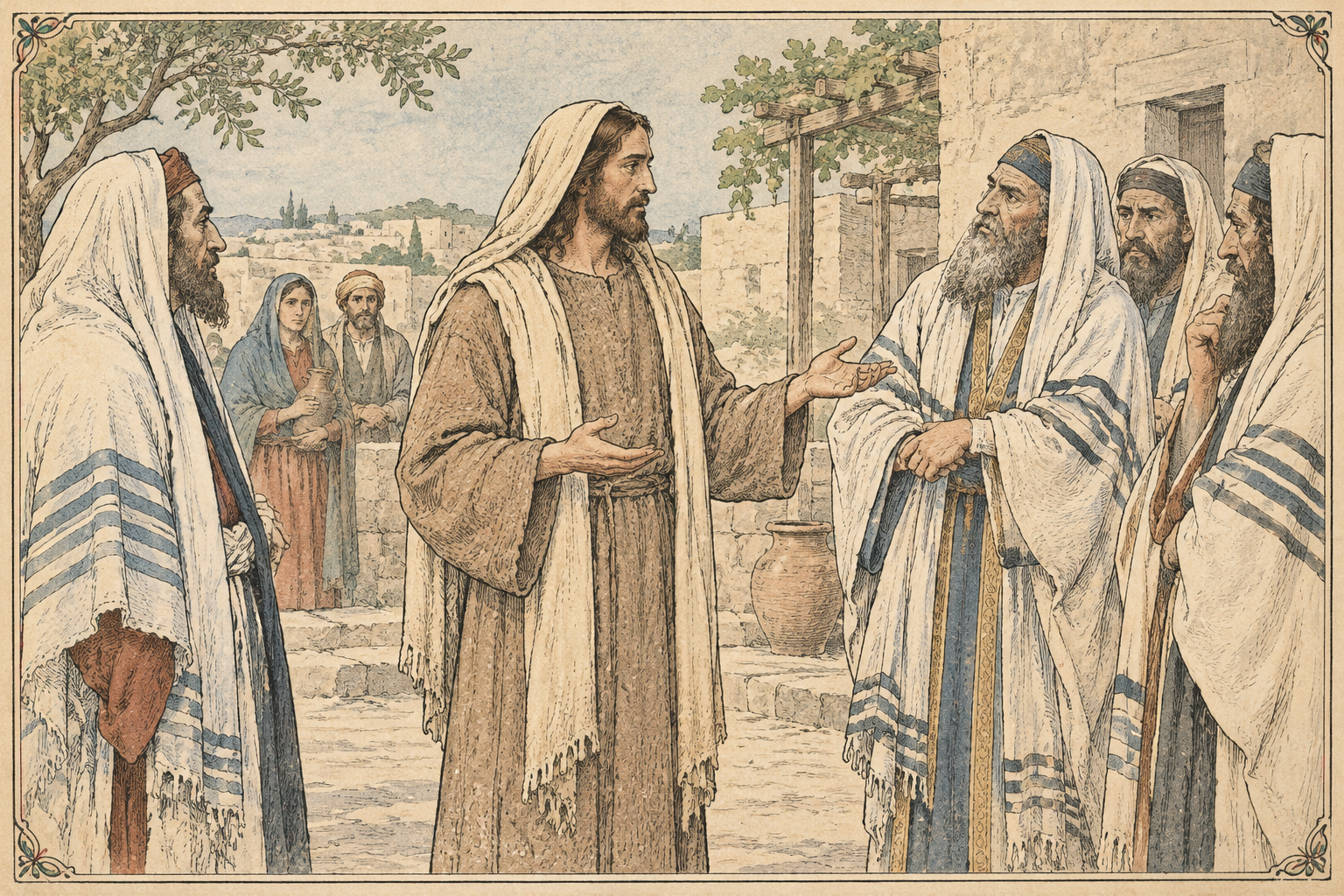
Paul did not invent this test. He inherited it. The pattern he lays out in Colossae mirrors, almost exactly, a confrontation Jesus (YHWShA) had with the religious leaders of his own day, years earlier, in Galilee.
Mark 7:6-13 and the Command of God Set Aside
The Pharisees and scribes come to Jesus with a complaint: his disciples are eating without the ceremonial handwashing required by "the tradition of the elders." Jesus does not answer by debating hygiene. He goes straight to Isaiah: "This people honoureth me with their lips, but their heart is far from me. Howbeit in vain do they worship me, teaching for doctrines the commandments of men." Then he makes the principle explicit: "For laying aside the commandment of God (Alohim), ye hold the tradition of men."
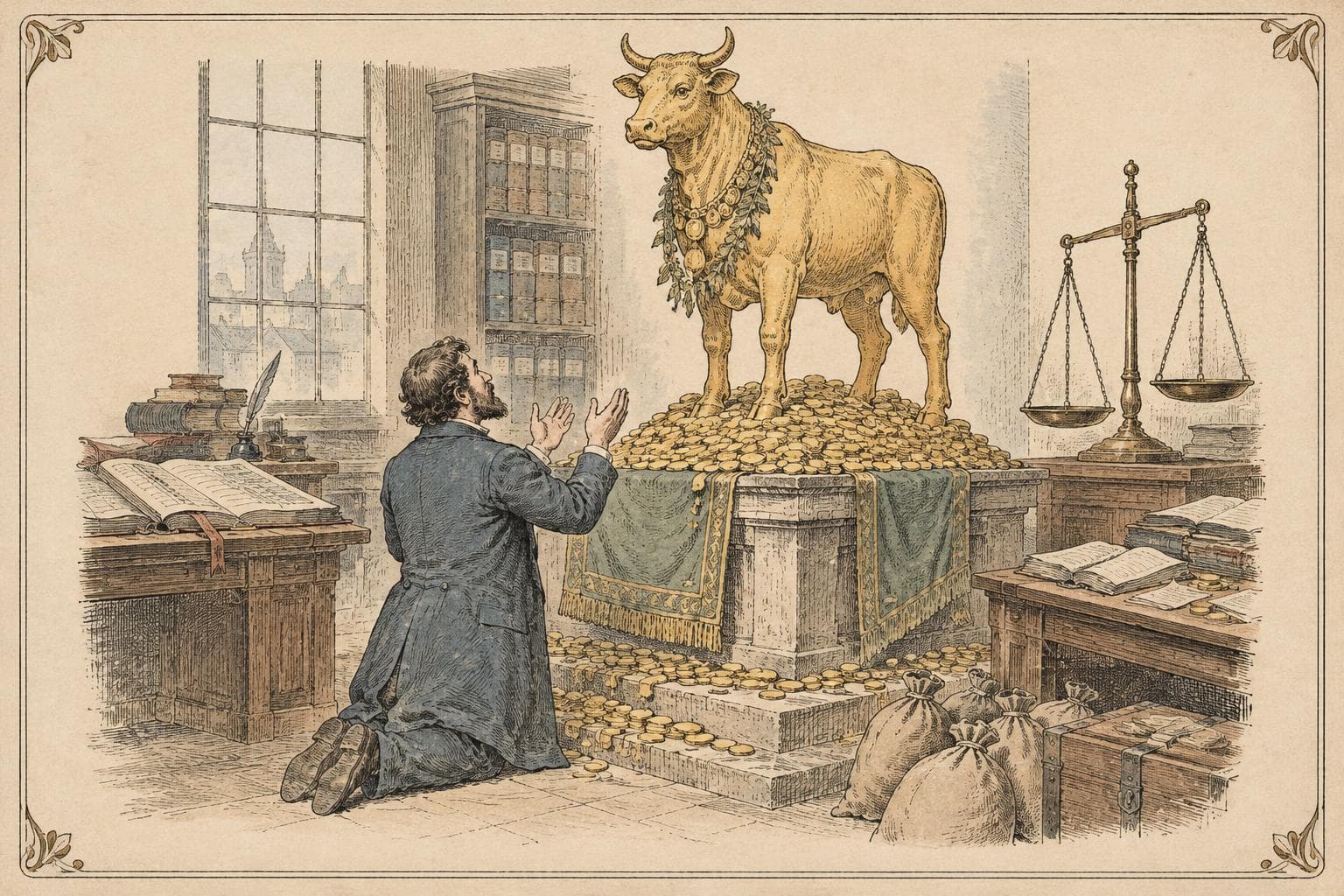
What follows is the detail that should stop every reader cold. Jesus gives a specific example: the practice of corban, whereby a man could declare his resources dedicated to the Temple and thereby excuse himself from the command to honor his father and mother by supporting them in old age. The tradition was not casual. It was carefully reasoned, religiously motivated, and sincerely practiced by devout people. That is exactly what made it dangerous. "Making the word of God of none effect through your tradition," Jesus says, "and many such like things do ye."
This is the test, stated by Jesus himself, decades before Paul wrote a word to Colossae. The question is not whether this tradition is old or sincere, but whether it has taken the place of God's actual command.
Matthew 15:3-9 and Worship That Misses Its Mark
Matthew's account of the same episode adds a line worth lingering over. Jesus asks the religious leaders, "Why do ye also transgress the commandment of God by your tradition?" and closes with the same Isaiah quotation Mark records: lips honoring God while the heart stays distant, worship offered "teaching for doctrines the commandments of men."
Notice what is not being condemned. Jesus is not condemning ritual, structure, or inherited practice as categories. The Levitical system he operated within was itself full of ritual, structure, and inherited practice, all commanded by God. What he condemns is substitution, the replacement of divine command with human invention, carried out under the banner of devotion. Worship that originates in the wrong place produces devotion that, however heartfelt, God never asked for. That should sit uncomfortably with anyone examining a modern practice, including the one wrapped in lights every December.
Christmas as a Test Case: What the Historical Record Shows
So far, the argument has stayed in the first century. Now comes the harder application: is Christmas tradition of men in the sense Paul and Jesus were warning against, or is it simply a tradition, neutral in itself, that believers are free to observe or not as conscience allows? Answering that honestly requires looking at what the historical record says, not what either side of the internet argument wants it to say.
No Apostolic Command or Practice of a Birth Feast
Begin with the plainest fact, one often skipped past too quickly by defenders of Christmas and too quickly seized by its critics. The New Testament records no command from Jesus, no instruction from the apostles, and no example of the earliest church observing an annual feast of Christ's birth. Paul, who wrote that Christ is our Passover and warned the Colossians about festival observance, never mentions a nativity celebration. The silence is total. This does not by itself prove a birth feast is forbidden. Silence rarely proves prohibition. But it does mean anyone claiming apostolic precedent for Christmas is claiming something the documents do not supply.
December 25, the Chronograph of 354, and Its Neighbors on the Calendar
The earliest clear Roman reference associating December 25 with Christ's birth appears in a document known as the Chronograph of 354, a Roman civil calendar and almanac compiled for a wealthy Christian in the city. This is nearly three and a half centuries after the events it commemorates, and it reflects Roman Christian practice already taking shape, not apostolic instruction. No earlier source ties a birth celebration to that specific date.
The date's proximity to existing Roman festivals is well documented and worth stating plainly, without overclaiming what it proves. Saturnalia, the raucous midwinter festival honoring Saturn, ran in mid to late December and was marked by gift-giving, feasting, and temporary social reversal. Separately, the emperor Aurelian promoted the cult of the Sun in AD 274, with a new temple and games. The earliest clear record of December 25 as the "Birthday of the Unconquered Sun," Natalis Invicti, comes from this same Chronograph of 354, and scholars dispute how much older that feast is. Whether the church chose December 25 because of these festivals, as a deliberate replacement, or arrived at the date through an independent calculation method some scholars have proposed (counting nine months from a presumed date of Christ's conception), remains genuinely debated among historians. What is not debated is that no biblical text assigns a birth date, and the date that won out sits in close company with Roman solar and winter festivals. Readers can draw their own conclusions about how much weight that proximity should carry, but it should at minimum be acknowledged rather than waved away.
The Evergreen Tree, Northern European Custom, and Jeremiah 10:2-4
The decorated evergreen tree is a separate question from the date itself, and conflating the two does neither side any favors. The documented history of the Christmas tree as a home custom traces to northern European and German folk practice centuries after the Chronograph, becoming widely popular in English-speaking countries only in the nineteenth century. It did not originate in any biblical account of the nativity and carries no connection to the manger scene whatsoever.
This is where Jeremiah 10:2-4 enters the conversation, often cited as a direct condemnation of Christmas trees: "For the customs of the people are vain: for one cutteth a tree out of the forest... They deck it with silver and with gold; they fasten it with nails and with hammers, that it move not." Handled carefully, the passage describes the construction of an idol, a carved image overlaid with precious metal and fastened so it will not topple, set in the context of a broader warning against idol worship among the nations surrounding Israel. It is not describing a decorated evergreen in a living room. Reading it as a direct prophecy against Christmas trees stretches the text further than the text will bear, and careful readers on both sides of this debate ought to say so plainly. None of this means the tree's actual pagan-adjacent folk origins are irrelevant. It means Jeremiah 10 is the wrong proof text to settle the question, and using it that way weakens an otherwise serious argument.
Shepherds, Seasons, and the Puritan Objection
Two further pieces of evidence have shaped Christian conviction on this question for generations, one from the biblical text itself and one from church history.
Luke 2:8 and the Shepherds in the Fields
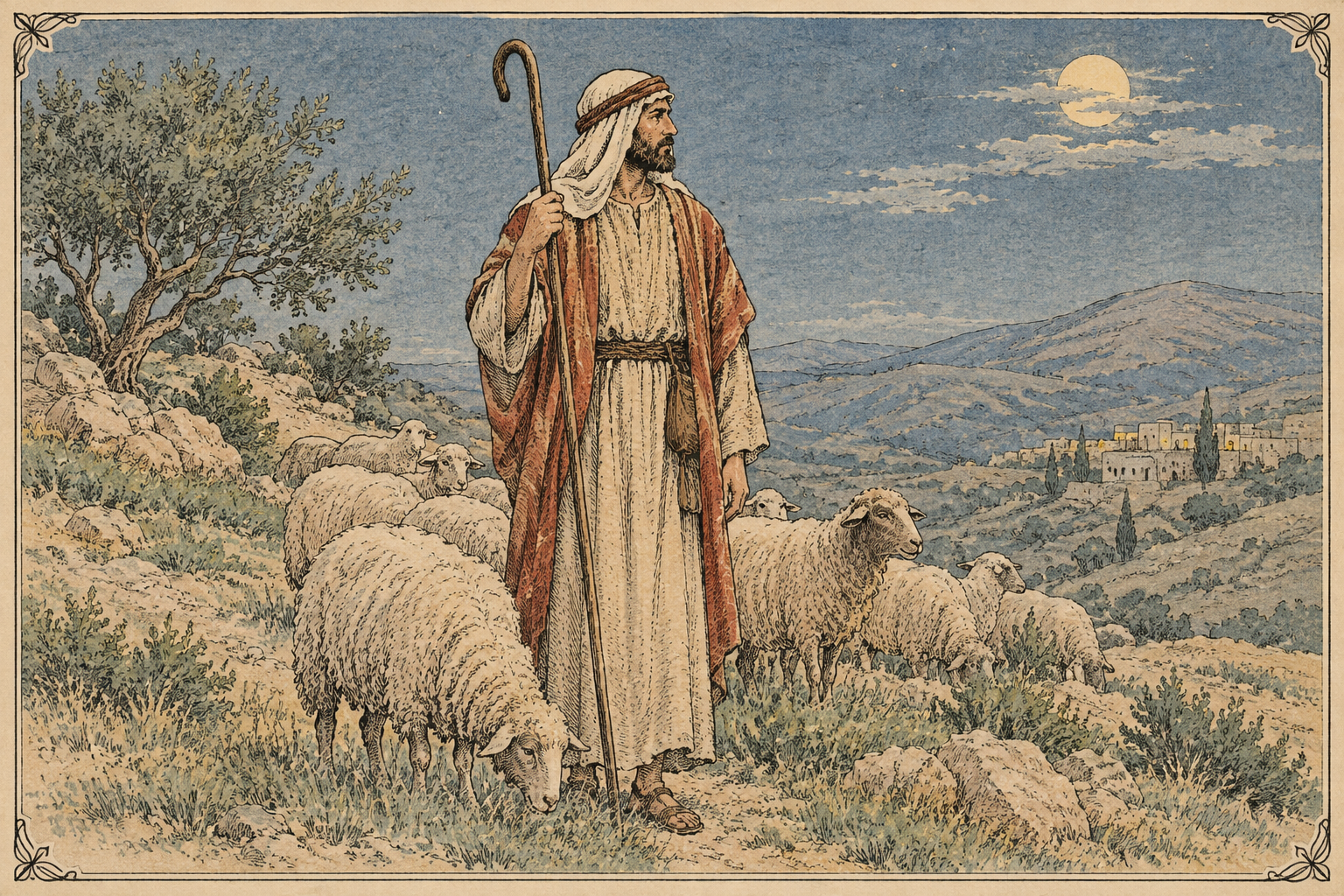
Luke records that "there were in the same country shepherds abiding in the field, keeping watch over their flock by night" at the time of Christ's birth. Many historians and commentators have noted that open-field shepherding through the night was far more typical of warmer months than of the cold, wet winter season in the Judean hill country, when flocks were more commonly kept near shelter. This observation has led a considerable number of scholars to conclude a winter birth date is unlikely on climatic and agricultural grounds. It is worth stating this as probability, not certainty. Shepherding practices varied by region and year, and the argument from Luke 2:8 is circumstantial rather than conclusive. But it adds reasonable weight to the broader case that December 25 reflects later Roman custom rather than historical memory.
When English Puritans and Massachusetts Colonists Said No
It is worth remembering this is not a new argument invented by modern Hebrew roots teachers or internet skeptics. English Puritans in the seventeenth century, convinced that Scripture alone should govern Christian worship, objected strenuously to Christmas observance, viewing it as unwarranted by Scripture and entangled with its Roman and medieval festive excesses. Parliament under Puritan influence banned the public celebration of Christmas in England in the 1640s. The colonists of Massachusetts Bay went further still, criminalizing the observance outright for over two decades in the mid-seventeenth century, with fines attached for anyone caught keeping the day.
This was not the position of ignorant or fringe figures. It was the considered conviction of serious, biblically literate Christians who concluded that a feast without scriptural warrant had no claim on the conscience of believers, however popular or beloved it had become. Whatever one concludes about Christmas today, the Puritan objection deserves to be remembered as a theological argument, not dismissed as mere kill-joy severity.
The Real Test: Scripture's Authority or the Tradition of Men
Which Practices Rest on the Word of God
Here is where the Colossians 2:8 tradition of men argument lands, and it is sharper than "is it pagan" or "is it popular." Paganism in a practice's distant ancestry does not automatically disqualify it. Popularity does not automatically justify it either. The question Paul and Jesus both press is one of authority and allegiance. Does this practice rest on the command of God, plainly given in Scripture, or does it rest on human invention, however old, however sincere, however wrapped in candlelight and carols?
That question applies to far more than a decorated tree. It applies to any practice believers assume is required or sacred simply because it has always been done, inherited rather than examined. The test Jesus gave the Pharisees over corban and the test Paul gave the Colossians over festivals and food is the same test. Tradition becomes dangerous not when it exists, but when it quietly replaces or obscures the actual command of God, and worshippers stop noticing the substitution has happened at all.
What Walking "After Messiah" Looks Like Instead
None of this means celebrating December 25 is itself a sin, and nothing here is meant to shame the reader setting up a tree this season. The New Testament gives believers real freedom in matters not bound by direct command, provided that freedom is exercised with a clear conscience and without claiming divine authority the practice does not carry. What Scripture does ask is honesty about which is which.
Walking after Messiah rather than after the tradition of men does not mean abandoning all festivity. It means asking, with Paul's rigor and Jesus's clarity, whether a practice carries the weight of God's own word or merely the weight of centuries. That question, asked honestly about Christmas and about everything else, is the invitation standing open to every reader this December.